


Lithuanian Presidency of the Council of the European Union
On 16 March 2026, the Department of Political Science at the Faculty of Political Science and Diplomacy invites you to attend a public lecture titled “Lithuanian Presidency of the Council of the European Union.”
The lecture will explore several key questions: What are the main priorities and challenges of Lithuania’s upcoming 2027 Presidency of the Council of the European Union? How is the preparation process being organized? Why is effective communication essential in everyday diplomatic practice? Which modern communication tools are currently used in diplomatic institutions?
Participants will have the opportunity to discuss these and other questions during a meeting with diplomats from the Ministry of Foreign Affairs of the Republic of Lithuania.
The event will feature three specialists in European diplomacy:
-
Mindaugas Bundza, Advisor at the Lithuania’s Presidency of the Council of the European Union Directorate;
-
Bertas Venckaitis, Head of the Communications Team;
-
Joris Bandzevičius, Attaché at COREPER II, EU Department.
Moderator assoc. prof. Andžej Pukšto.
The lecture will take place at the Vytautas Magnus University Faculty of Political Science and Diplomacy (V. Putvinskio g. 23, Kaunas), Room 311, starting at 4:00 p.m.
The seminar will be held in English.

Presentation of the first book on Lithuanian history written in Arabic
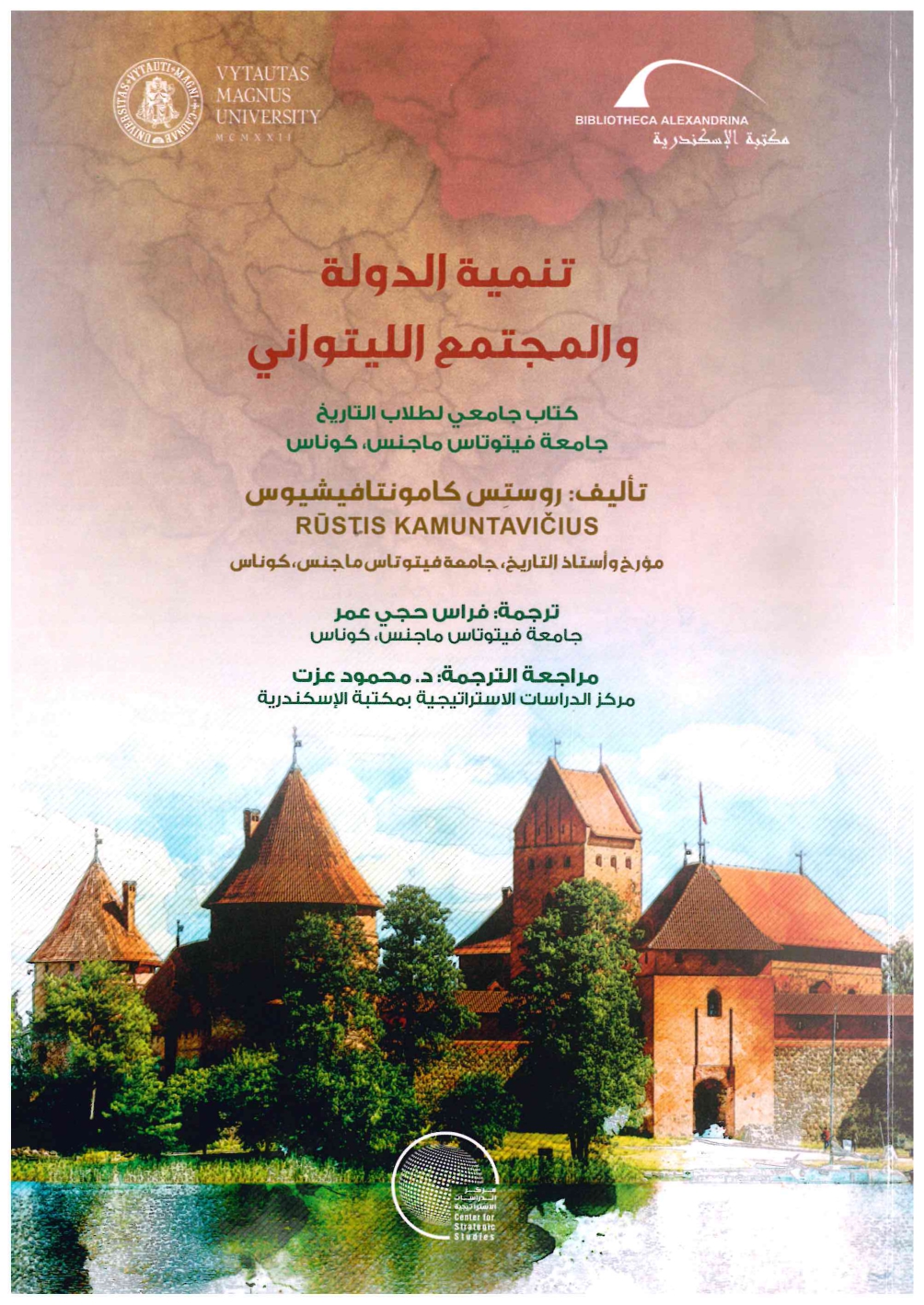 On February 23, 2026, the Department of Political Science at the Faculty Political Science and Diplomacy and the Department of History at the Faculty of Humanities invite you to an international seminar entitled “The Role of Cultural Diplomacy in Bilateral Relations between Lithuania and the Arab Republic of Egypt.”
During the seminar, the book “History of Lithuania” by assoc. prof. Rūstis Kamuntavičius, published in Arabic by the Library of Alexandria (translated by Omer Fras Haji), will be presented and opportunities for cultural cooperation between Lithuania and Egypt will be discussed. In addition to the author of the book, the event will be attended by prof. Mahmoud Ezzat, the initiator of the book’s publication, Director of the Center for Strategic Studies at the Library of Alexandria, and representatives of the Department of Political Science, prof. Šarūnas Liekis and doctoral student Walid Blila (discussion moderator). The event will take place at the Leonidas Donskis Library (V. Putvinskio g. 23, Kaunas), starting at 1:00 p.m.
The event will take place at the Leonidas Donskis Library (V. Putvinskio g. 23, Kaunas), starting at 1:00 p.m. The seminar will be held in English.
VMU will host the 51st Kettil Bruun Society Symposium. Call for papers.
The 51st KBS Symposium is hosted by Vytautas Magnus University (VMU) in collaboration with the Lithuanian University of Health Sciences, Kaunas IN, and the Kaunas City.
We are thrilled to announce that the Call for Abstracts for the 2026 KBS Conference is now open! The 2026 meeting in Kaunas, Lithuania, taking place from 1 to 5 June, will be a wonderful opportunity for our community to come together, share new insights, and reconnect. We warmly invite all colleagues engaged in alcohol research to take part in the 51st Annual Alcohol Epidemiology Symposium of the Kettil Bruun Society.
We have a special conference planned that combines the modern and the historic to create an unforgettable experience for all participants. You can read more on our website. We hope that we will see as many of you as possible in attendance and we are working hard to make it as easy as possible for you to attend, wherever you come from. Please do not hesitate to contact us with any queries at kbs2026lithuania@gmail.com .
The primary purpose of the annual KBS symposium is to provide a forum for researchers involved in studies on alcohol to exchange ideas about their ongoing research. Therefore, empirical research, theoretical papers and reviews of the literature are welcome. Social and epidemiological studies are interpreted in a broad context as they may include research in a variety of disciplines, such as psychology, sociology, anthropology, criminology, economics, history, public health and other disciplines.
The Symposium focuses on discussion of pre-circulated papers. Papers are presented in 10-minute segments followed by a discussant’s comments and general audience participation. Any person submitting a paper may be asked to be a discussant or chair of a session.
Researchers are invited to submit informative abstracts by 31 January 2026 via the conference website.
Papers can be on any topic broadly related to alcohol epidemiology and alcohol policy, previous conferences have broadly grouped the program into the following topics:
- Theory & conceptual issues (drinking cultures, diagnostic classifications and concepts, history, anthropology and economics, ethical considerations);
- Epidemiology (drinking patterns & drinking consequences);
- Policy (public policies & role of the alcohol industry);
- Behaviour change, interventions & treatment; and
- Methodology (instruments & measurements, modelling & quantitative methods, qualitative and mixed approaches).
We are especially aiming for a strong program of work around the alcohol and First Nations people cutting across all these themes.
The word limit for the abstract is 250 words (maximum 3 keywords). The abstract must always include a sentence (Declaration of Interest) stating whether there exists any relationship that could be viewed as presenting a potential conflict of interest (if so, a full disclosure must be given).
Abstract submission and financial aid application webpages are open now.
- The deadline for submission of abstracts as well as applications for financial aid is 31 January 2026
- Abstract and financial aid decisions will be communicated by late February 2026
- Early bird registration will be available until 1 March 2026
- Early-career scientists who present papers at this year’s conference can apply for the Ole-Jørgen Skog Award. The deadline for sending in your contribution is 3 May 2026.
We kindly encourage you to share this call for abstracts with colleagues who are engaged in alcohol research.
Website: www.kbs2026lithuania.org
Email: kbs2026lithuania@gmail.com
Hashtag: #KBS2026
This event is one of the activities of the project “Strengthening of R&D activities of the Vytautas Kavolis Transdisciplinary Institute of Social and Humanities Sciences (SOCMTEP)”. The project is financed by the Lithuanian Science Council and the Ministry of Education, Science and Sports of the Republic of Lithuania, contract no. S-A-UEI-23-13 (12/27/2023).
INTERREG project: “Empowering border communities: education and strategies against disinformation. Practical recommendations”
Interreg is a series of EU funding programs that support cooperation. By bringing together organizations from across Europe and beyond, Interreg tackles common challenges and builds long-lasting relationships. From boosting economic growth and regional cohesion to protecting the environment and promoting sustainable development, Interreg-funded projects are making a real difference to people’s lives. Together, we are building a more united, resilient, and prosperous Europe, where every region thrives.
The project, which is being developed by the Faculty of Political Science and Diplomacy, aims to neutralize the influence of Russian propaganda and fake news on the younger generation and adults living in the border regions of Lithuania and Poland, which border Russia and Belarus. These regions are currently particularly vulnerable to the threats of information warfare, so the project’s activities are focused on increasing public resilience.
Russia’s aggression against Ukraine and its intensifying information campaign pose a serious threat to democracy, civic cohesion, and regional security. The younger generation, which actively uses social networks, is particularly vulnerable to disinformation. The project will help to develop critical thinking, media literacy, and the ability to recognize propaganda.
Main activities:
- Social research on the impact of propaganda in border regions.
- Training for students and adults on how to recognize and neutralize disinformation.
- Preparation of a special handbook and training program for schools and universities.
- Summer school for Lithuanian and Polish students, promoting cooperation and resilience to information threats.
- Public events and an international conference to raise public awareness.
Project benefits:
- Strengthen the resilience of Lithuanian and Polish border communities to propaganda.
- Develop critical thinking and media literacy among young people and adults.
- It will create long-term measures to combat disinformation (textbooks, training programs).
- It will promote international academic cooperation and public engagement.
Project duration: June 1, 2025 – May 31, 2027.
Budget: EUR 209,868.75 (EU contribution – EUR 167,895).
Partners: University of Warmia and Mazury in Olsztyn (Poland) and Vytautas Magnus University (Lithuania).
Project implementers at VMU: Prof. Mindaugas Jurkynas and Lect. Aistė Žemaitytė.
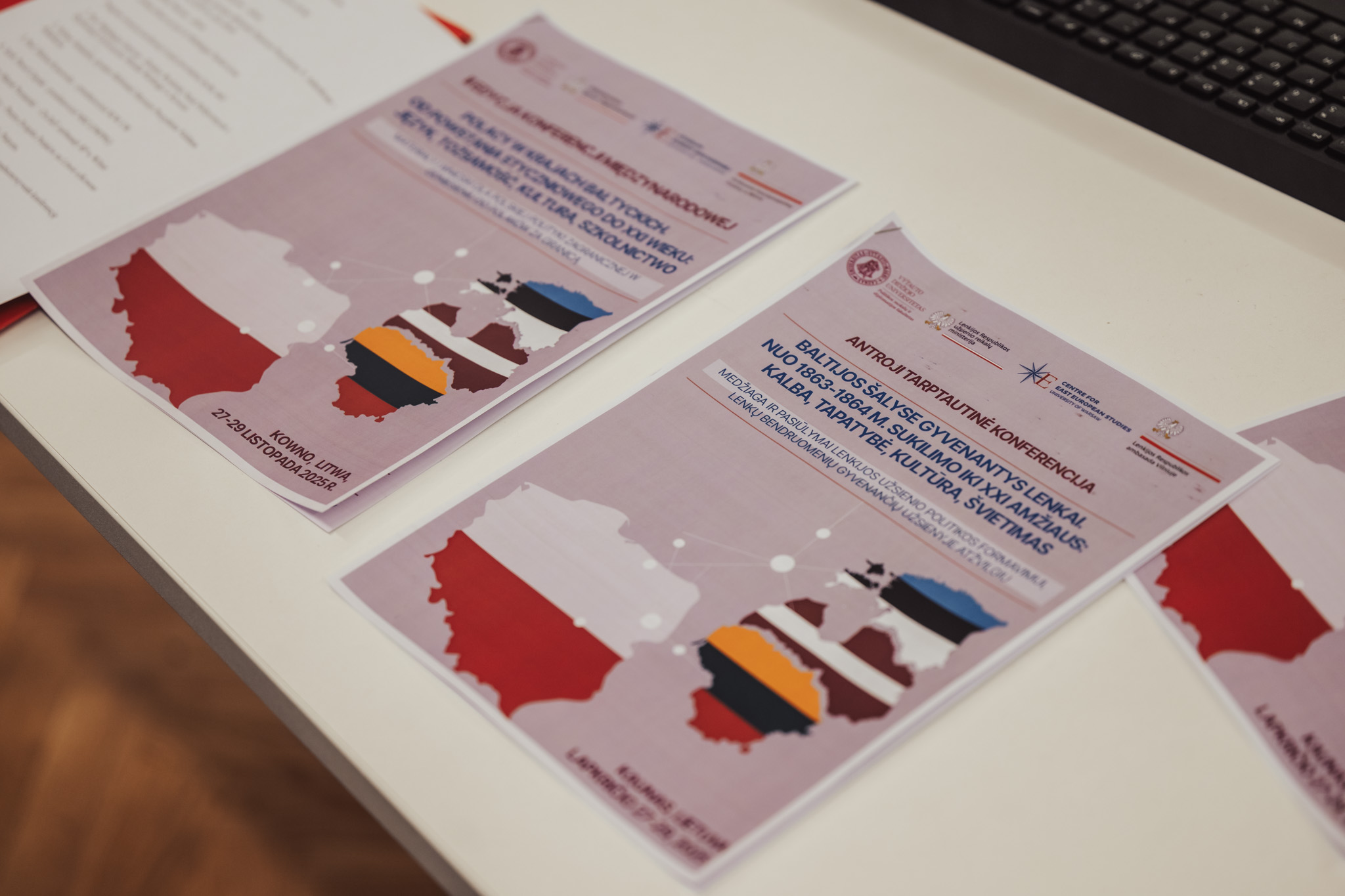
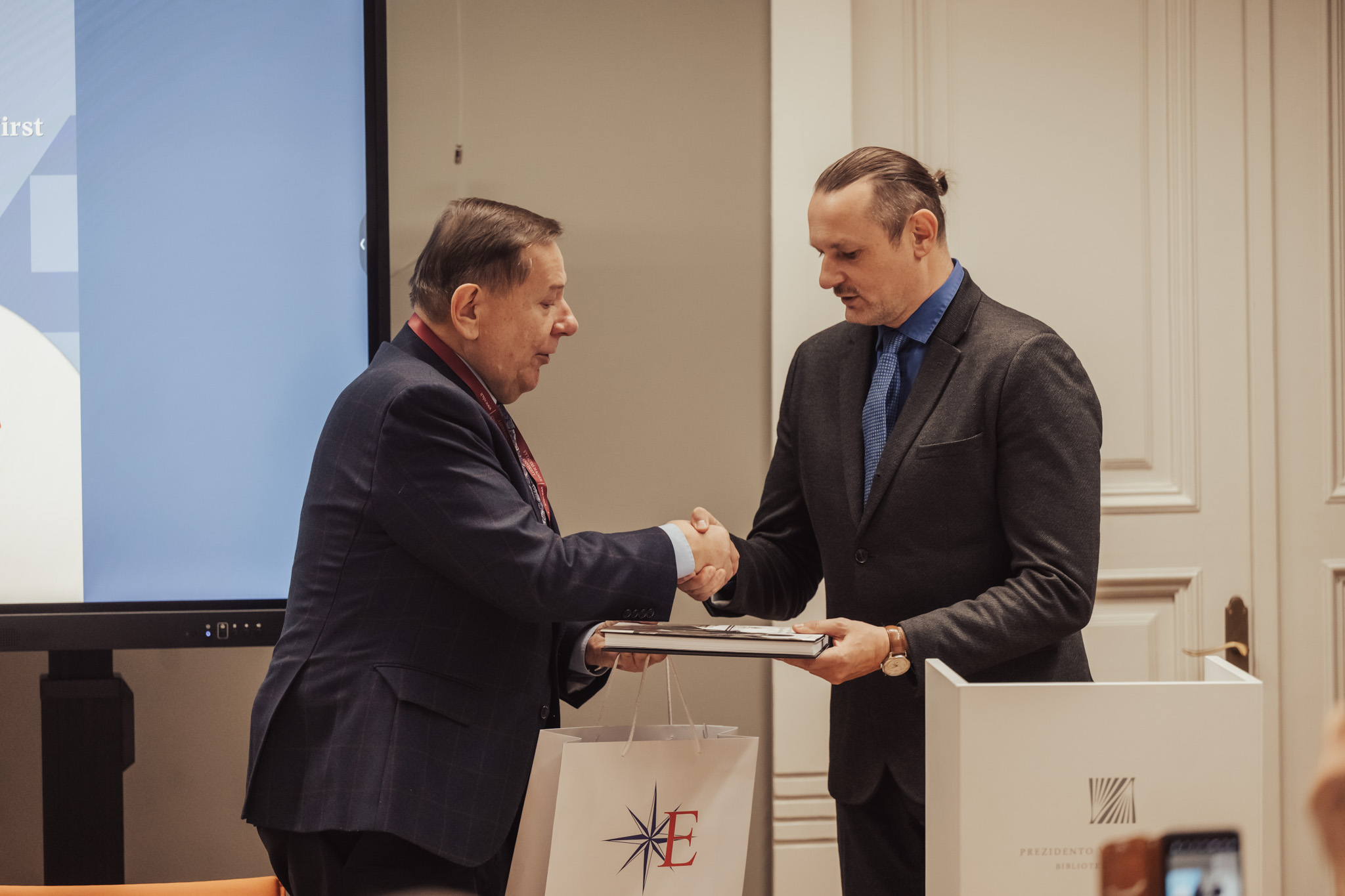
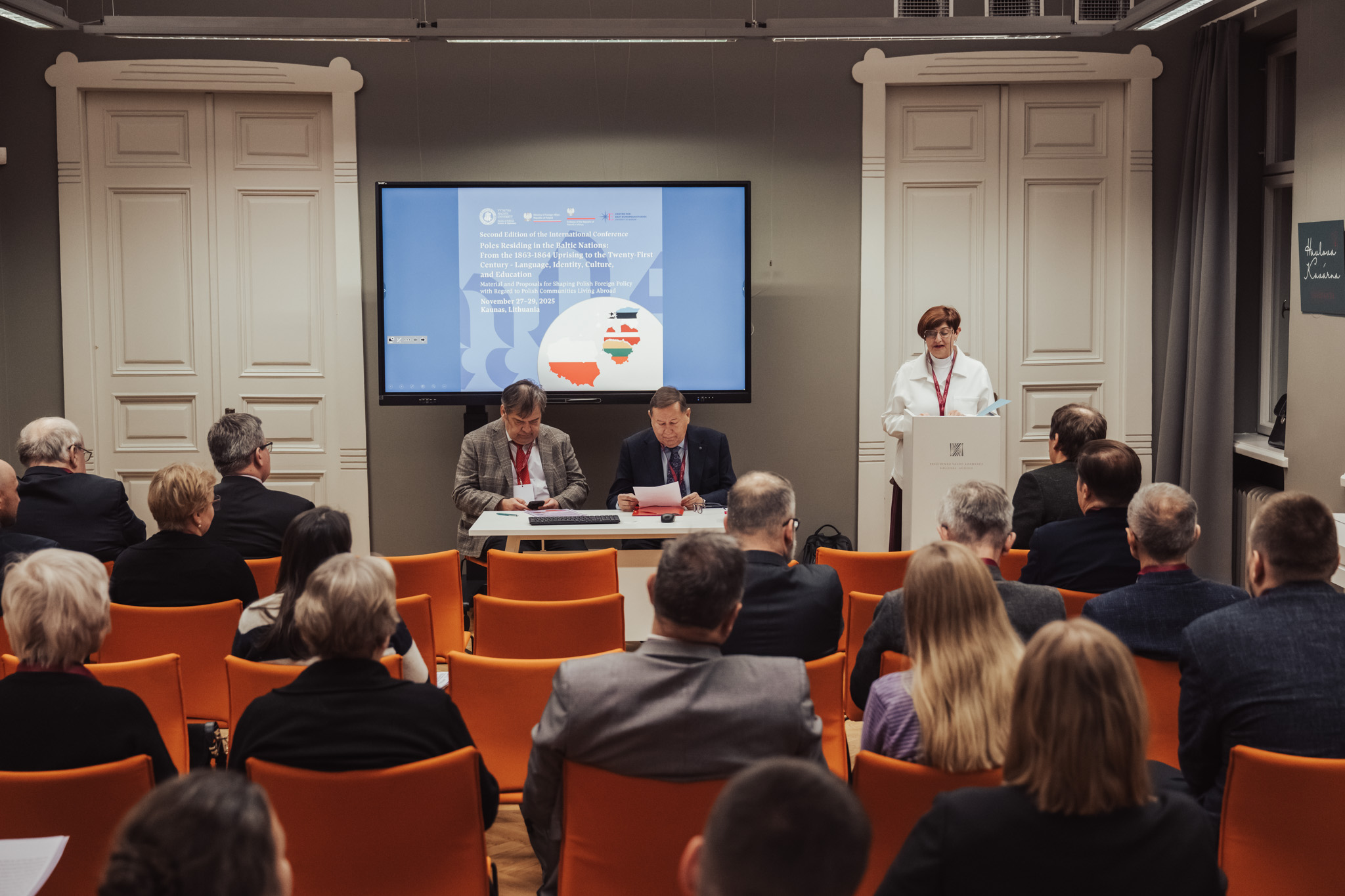
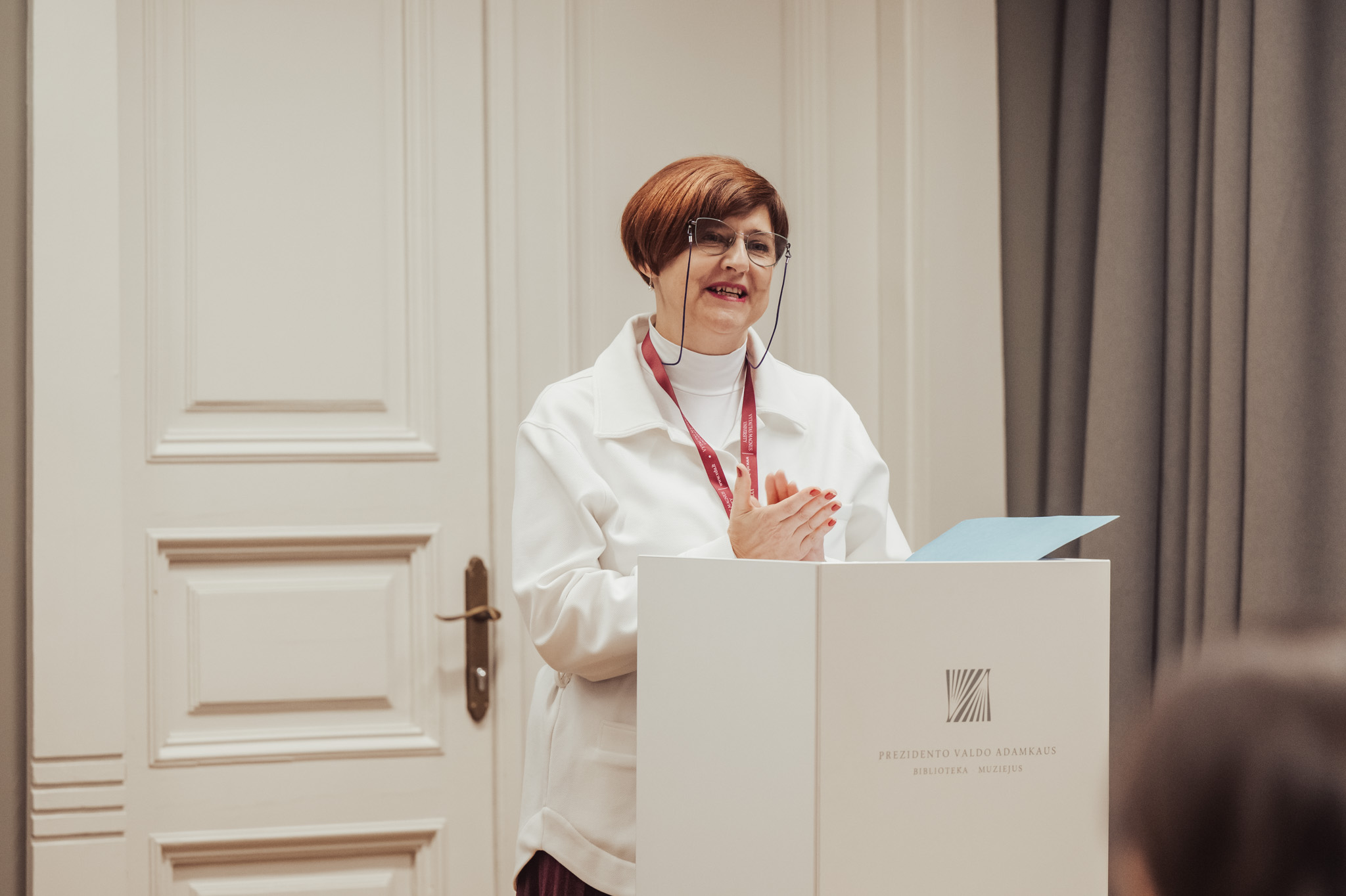
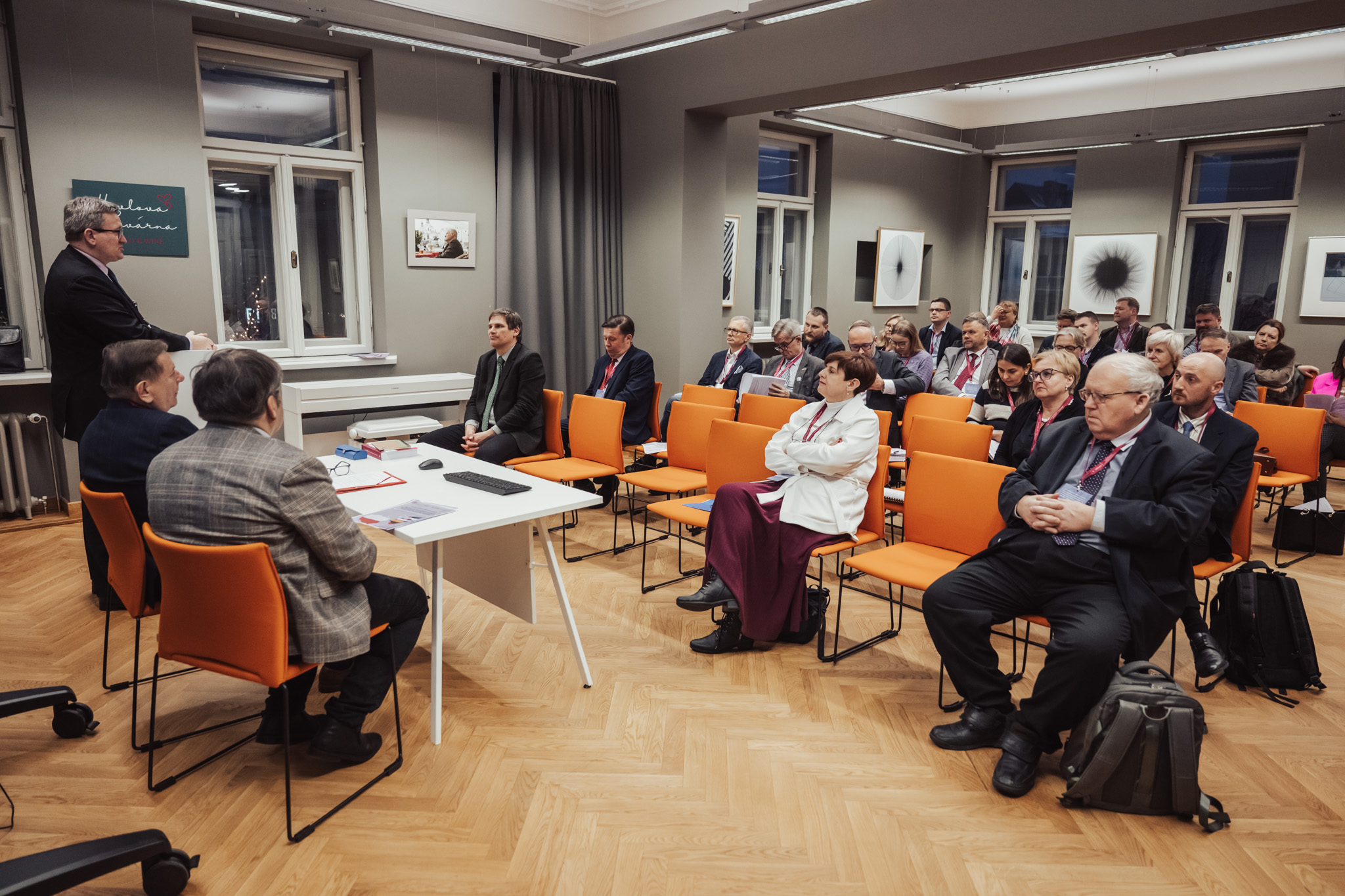
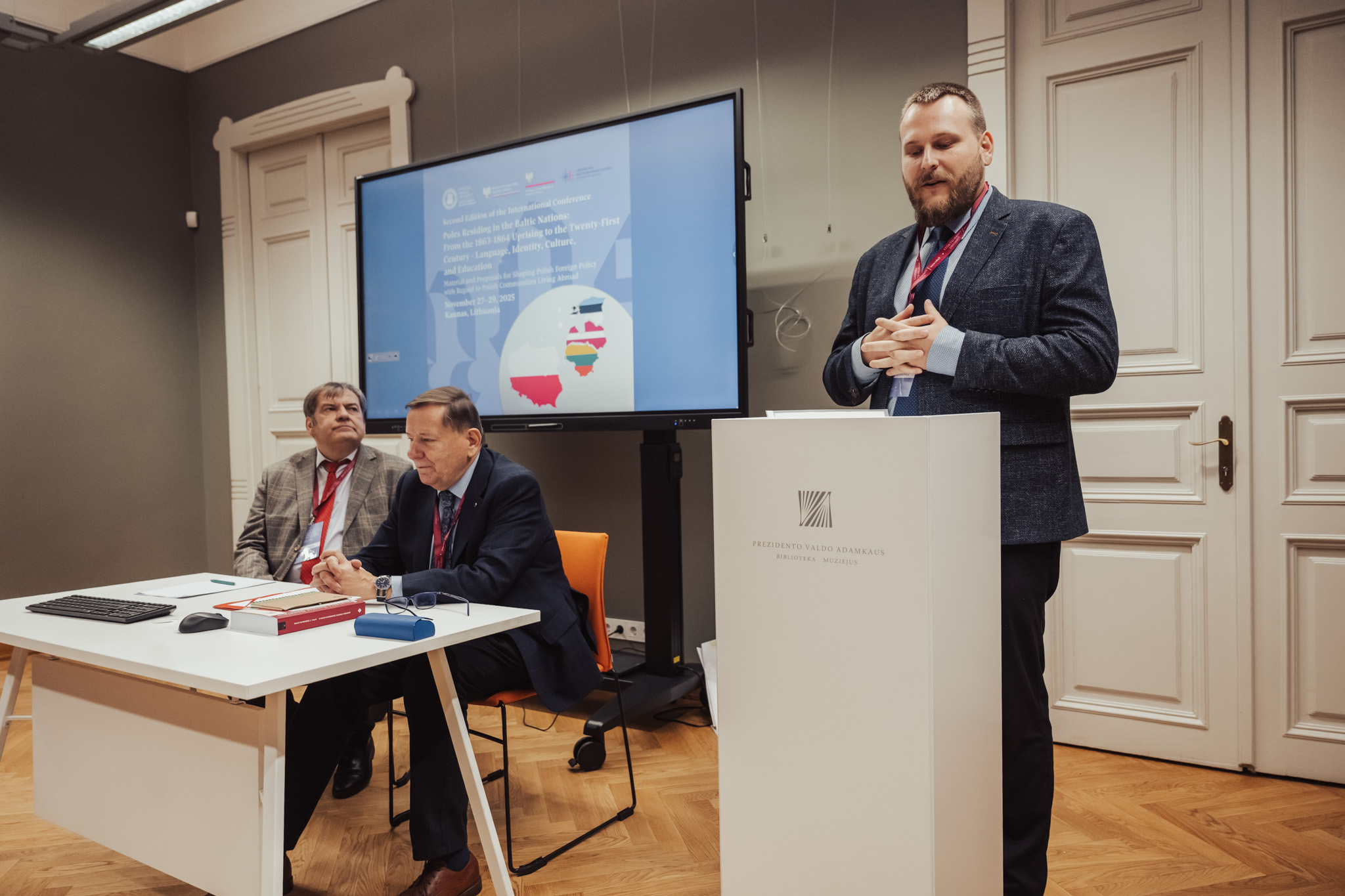
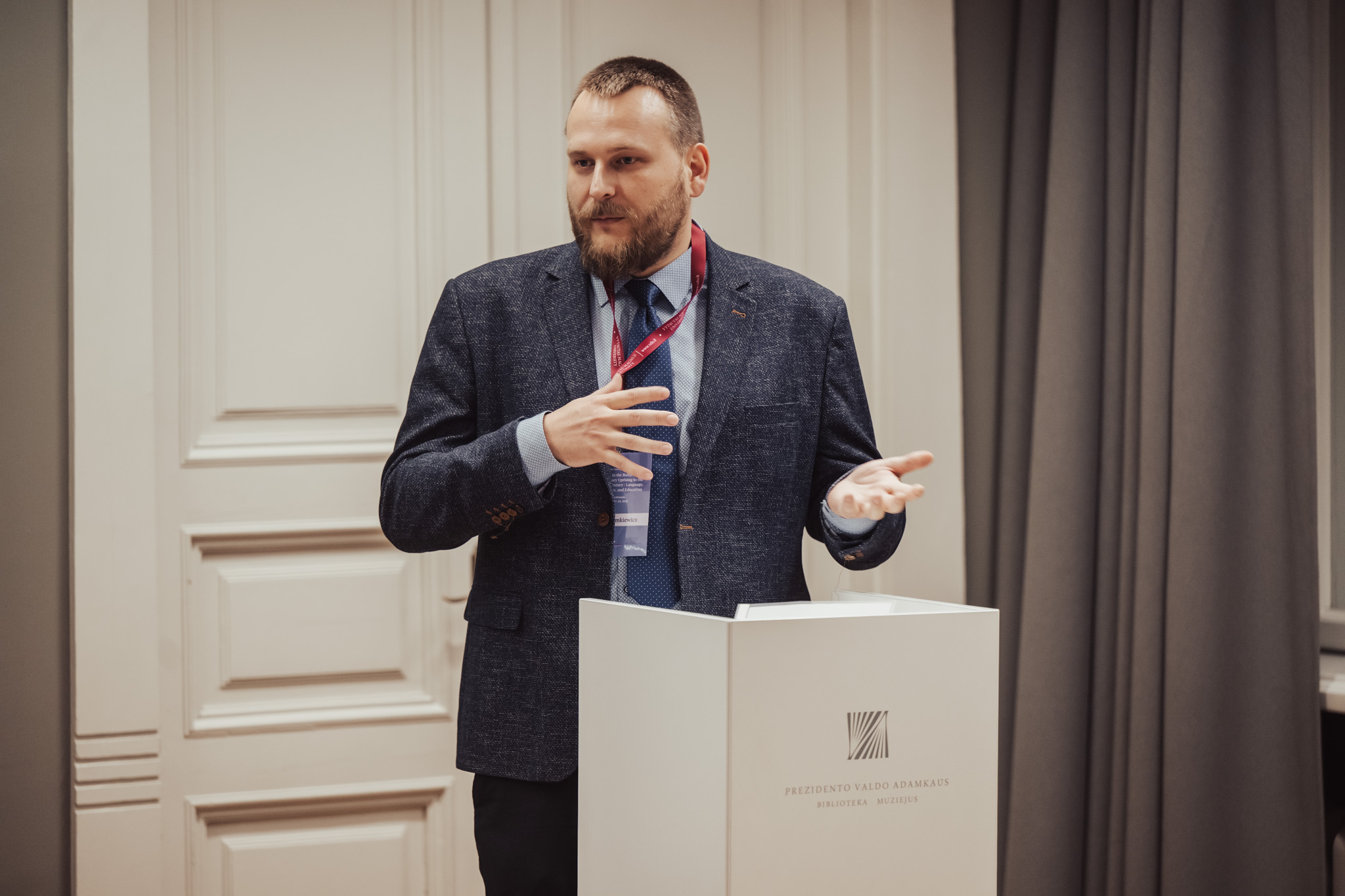
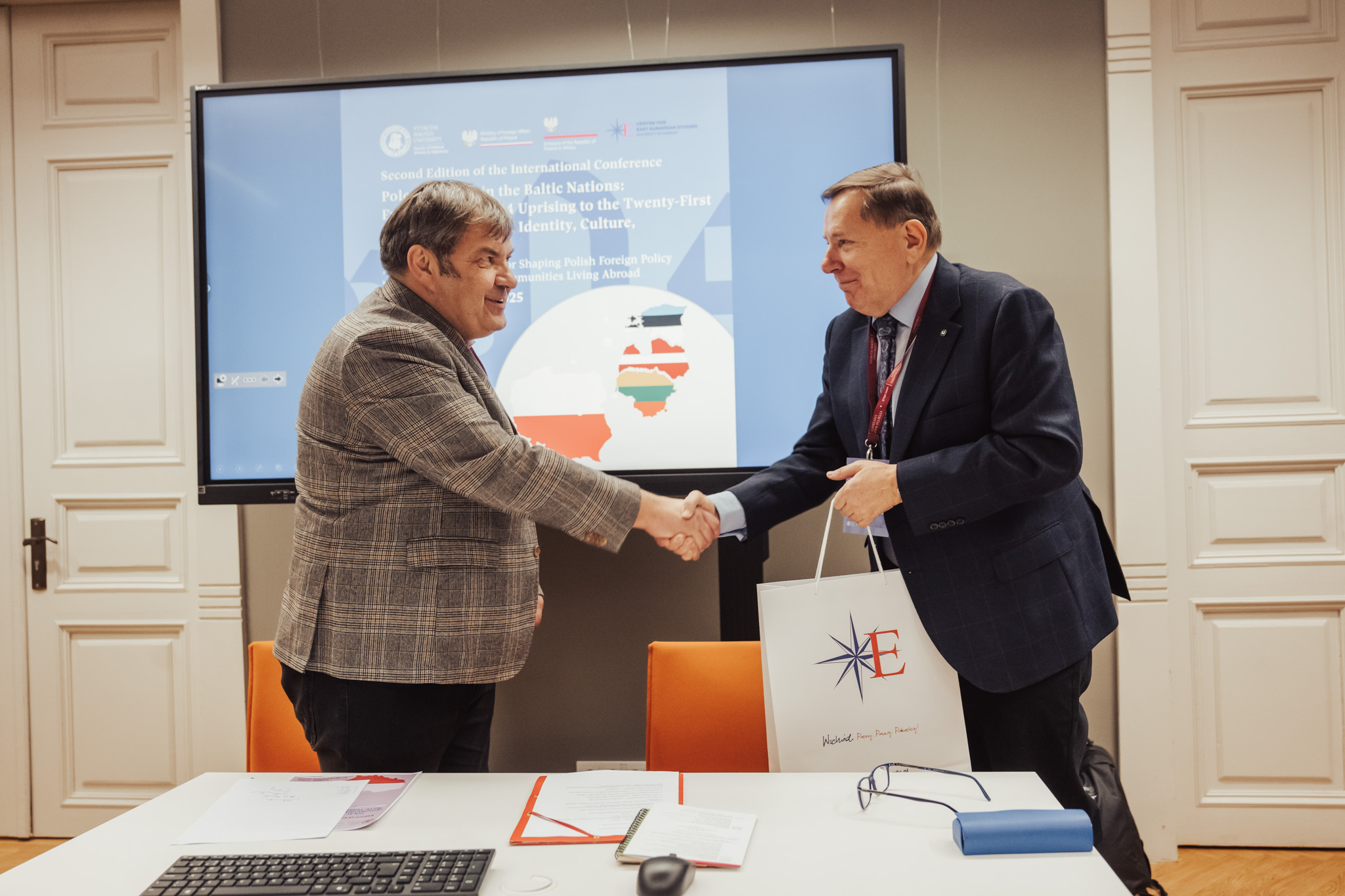
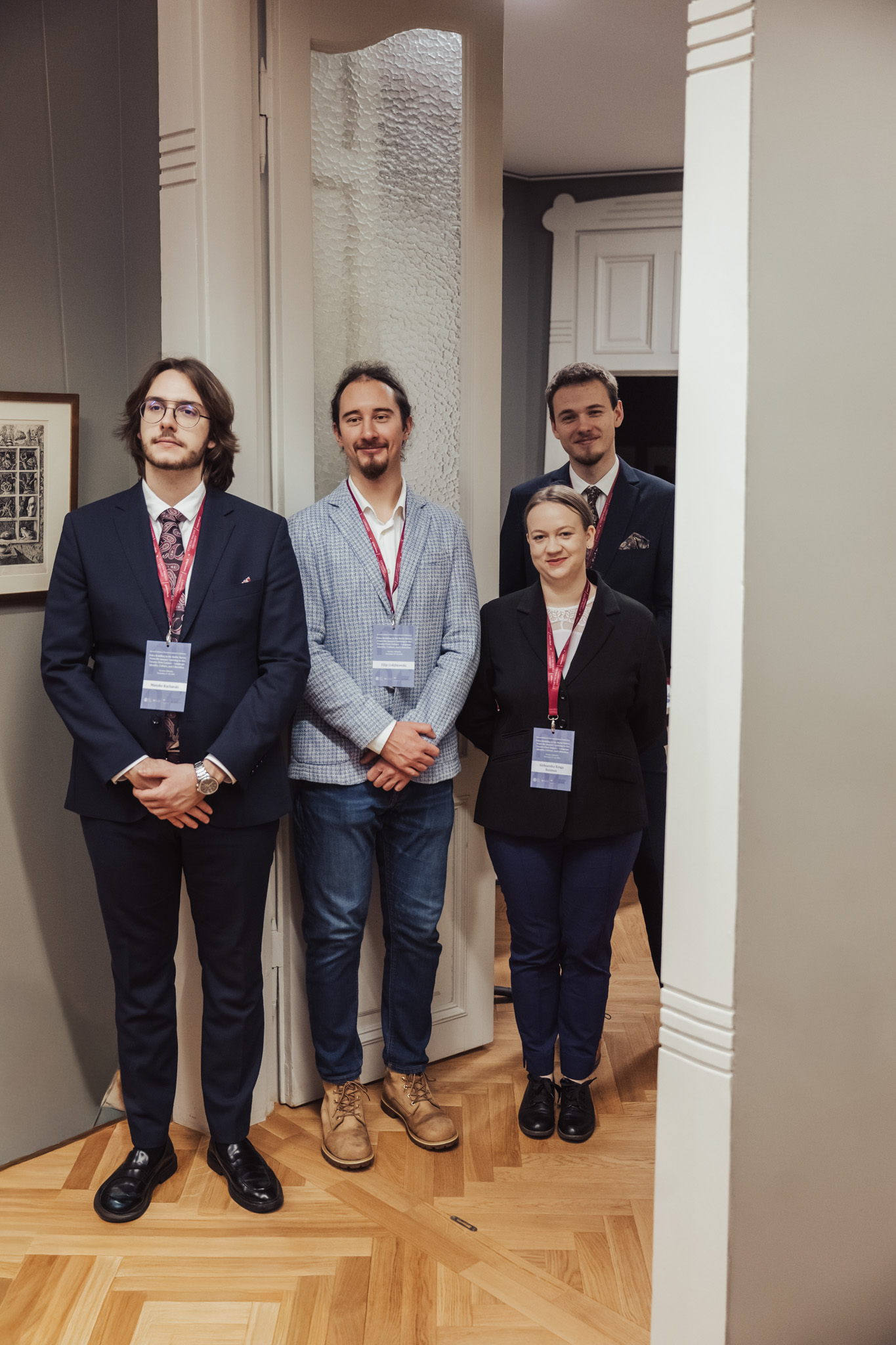
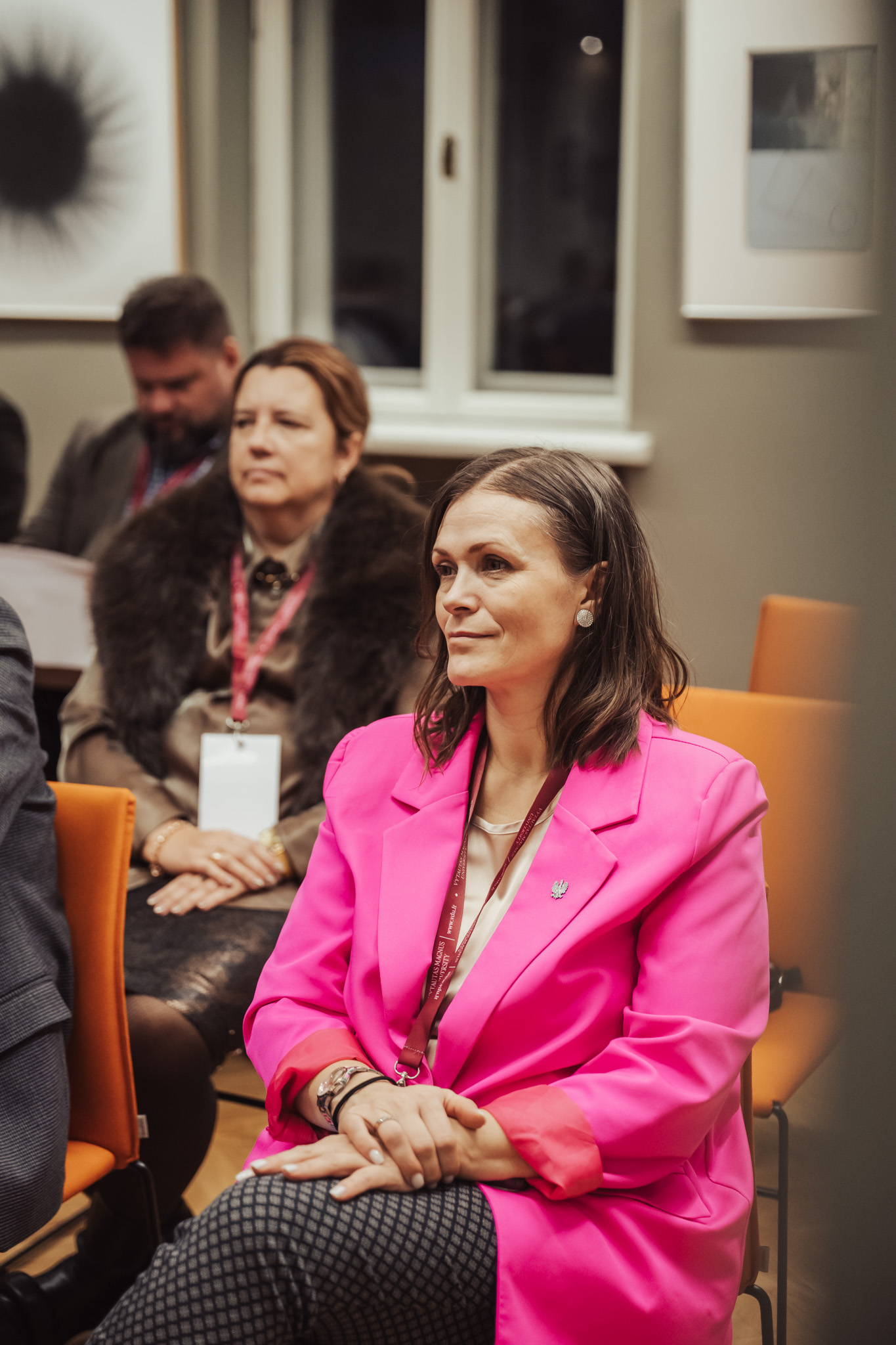
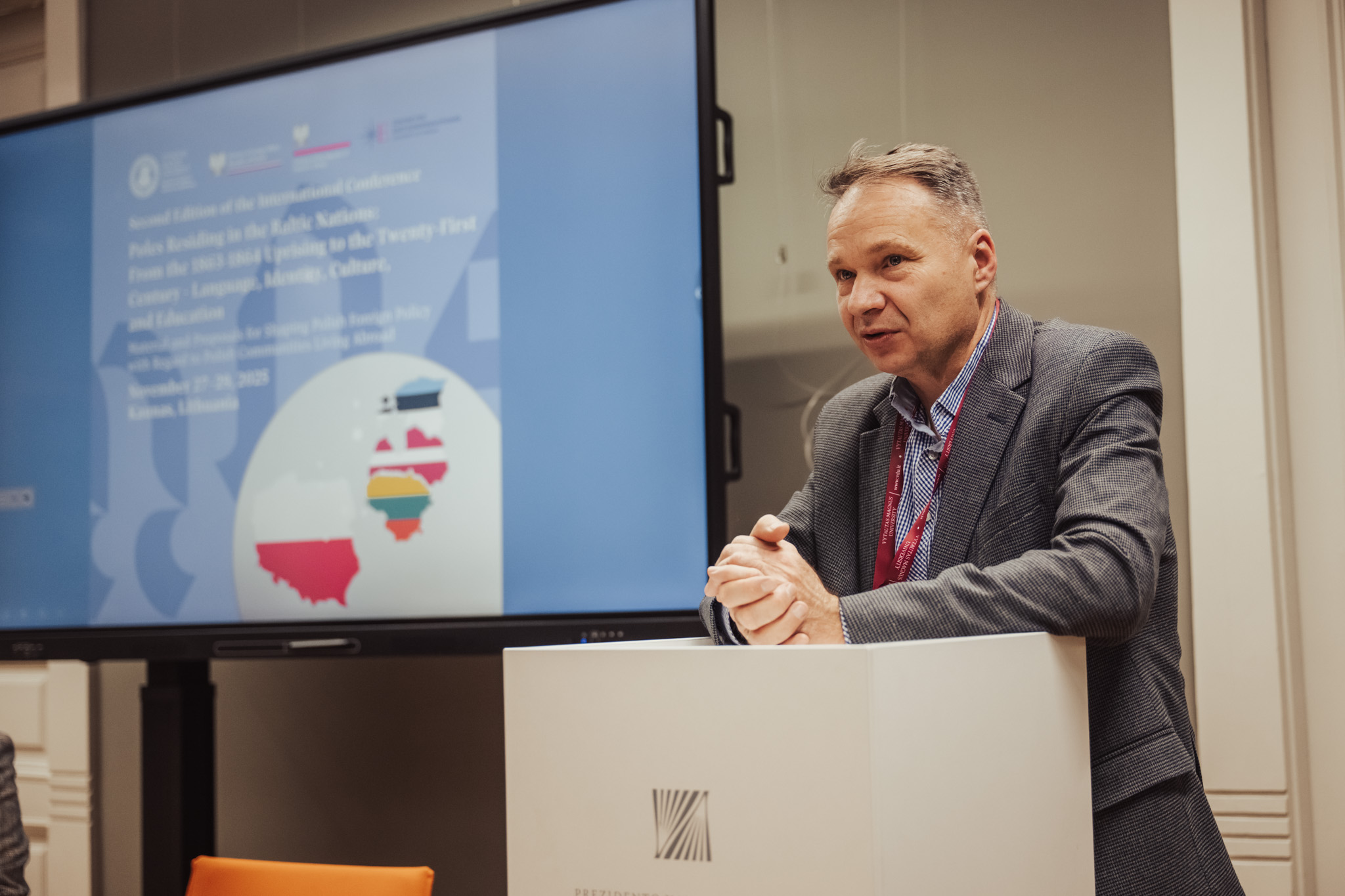
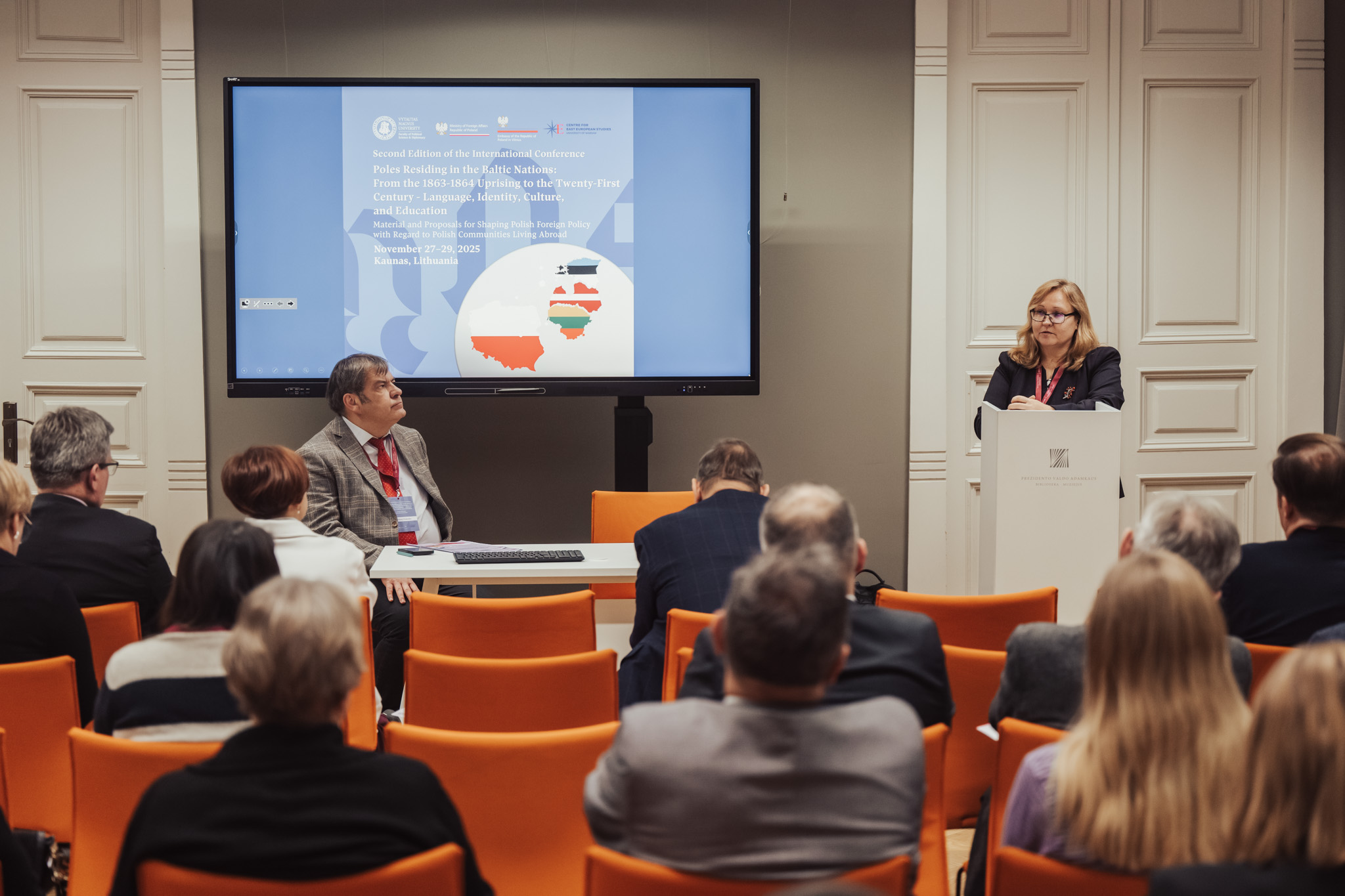
II-nd international conference “Poles Living in the Baltic States. From the 1863-1864 uprising to the 21st century: language, identity, culture, education”.
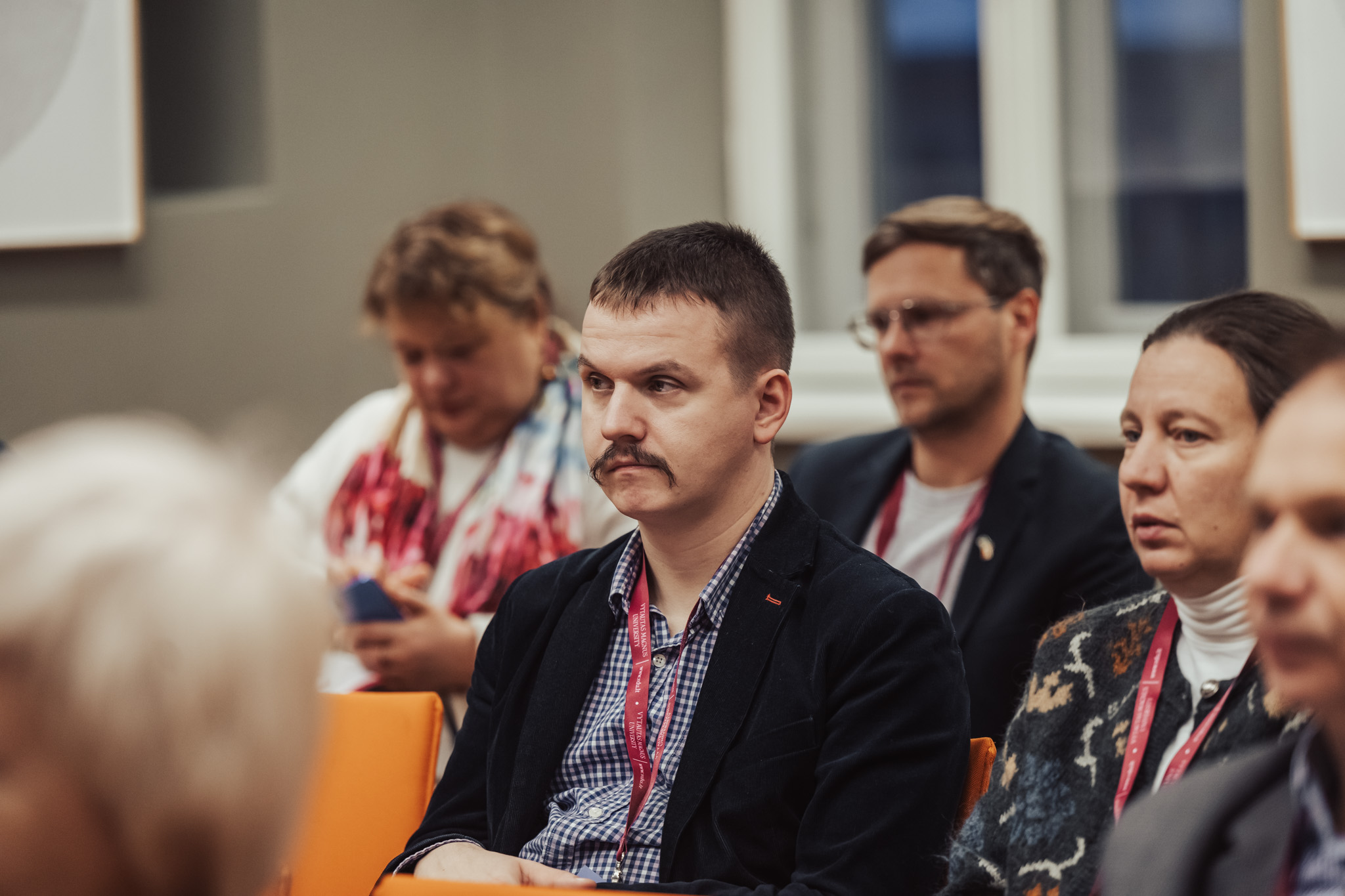
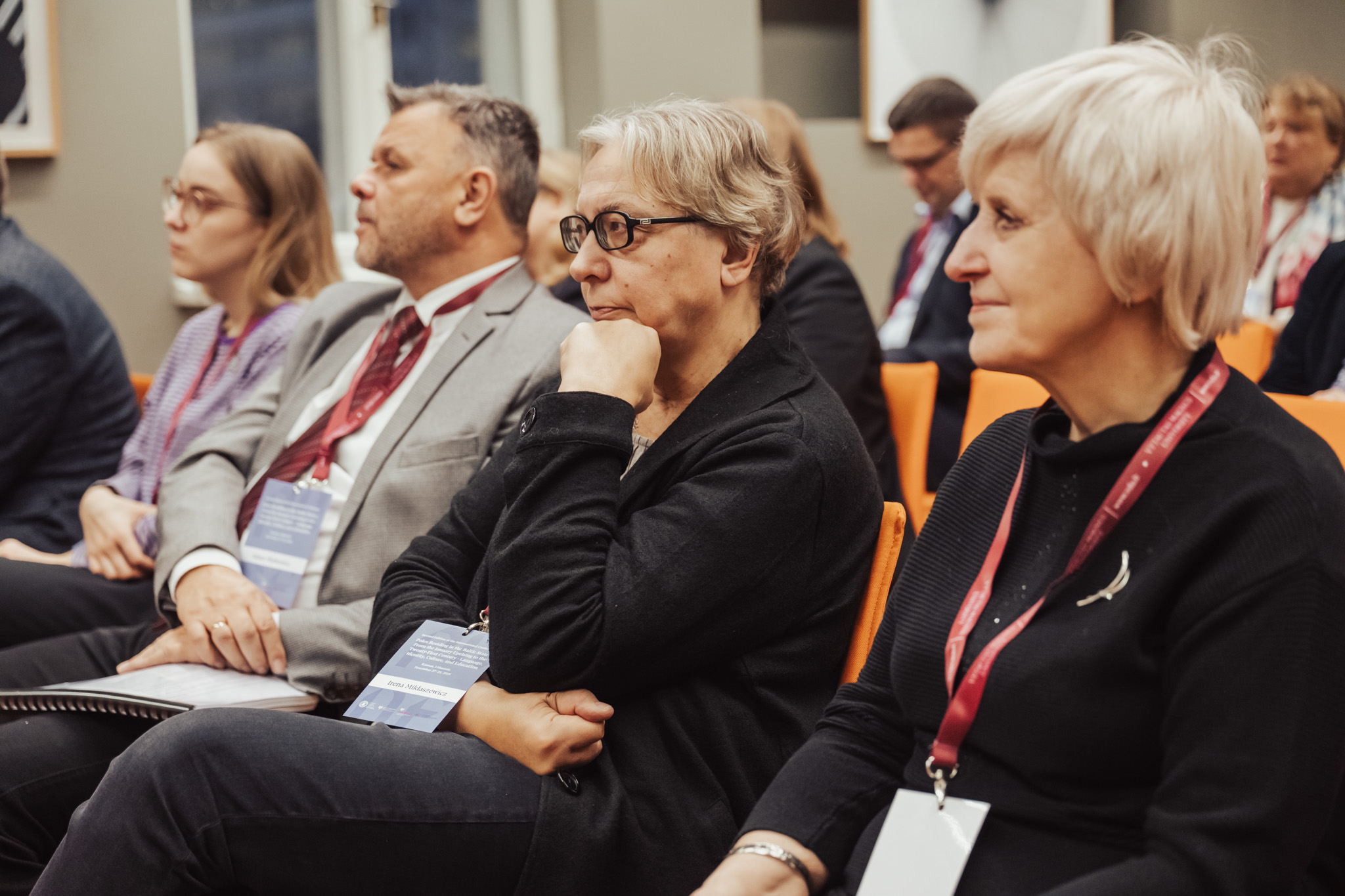
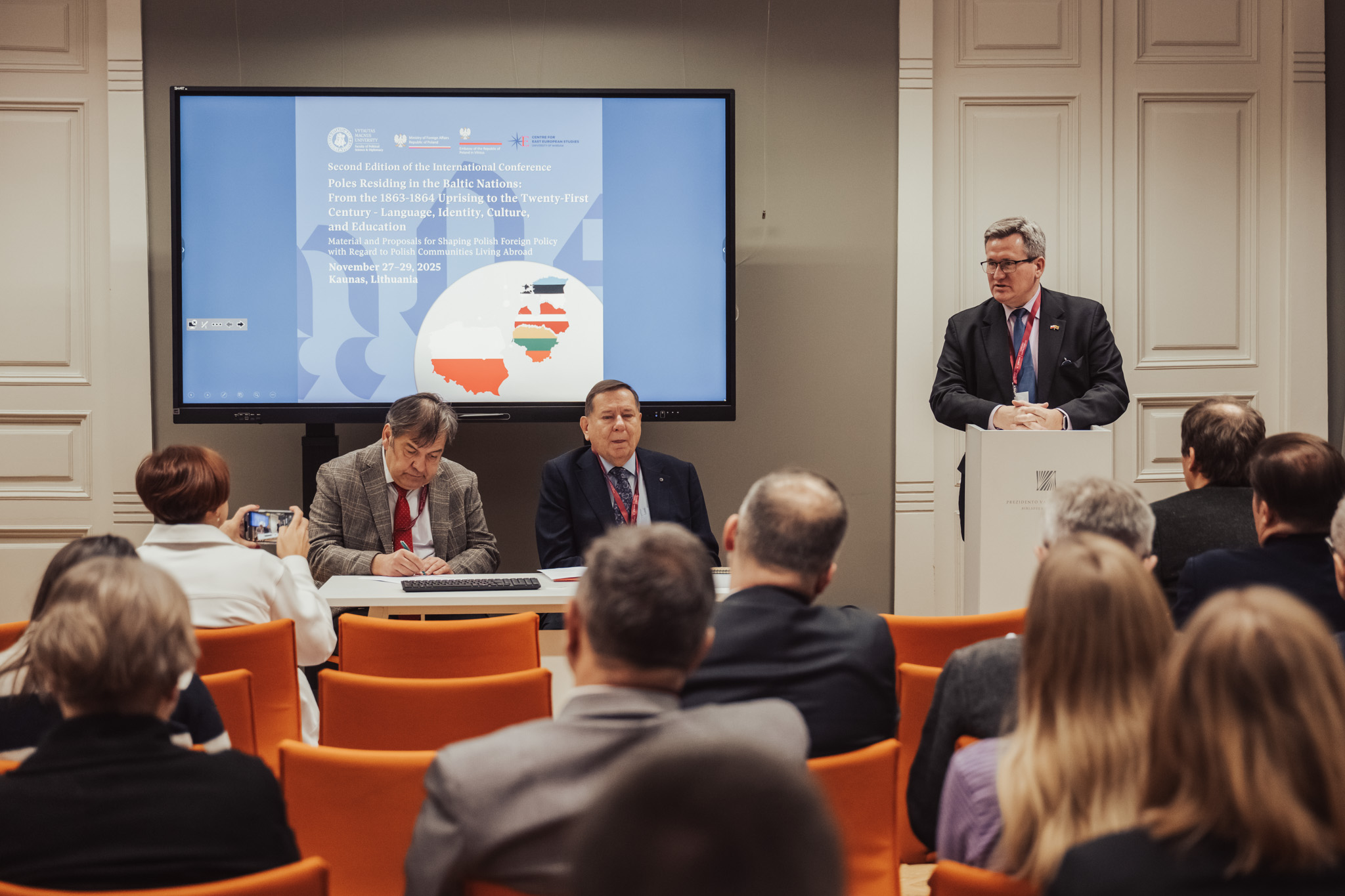
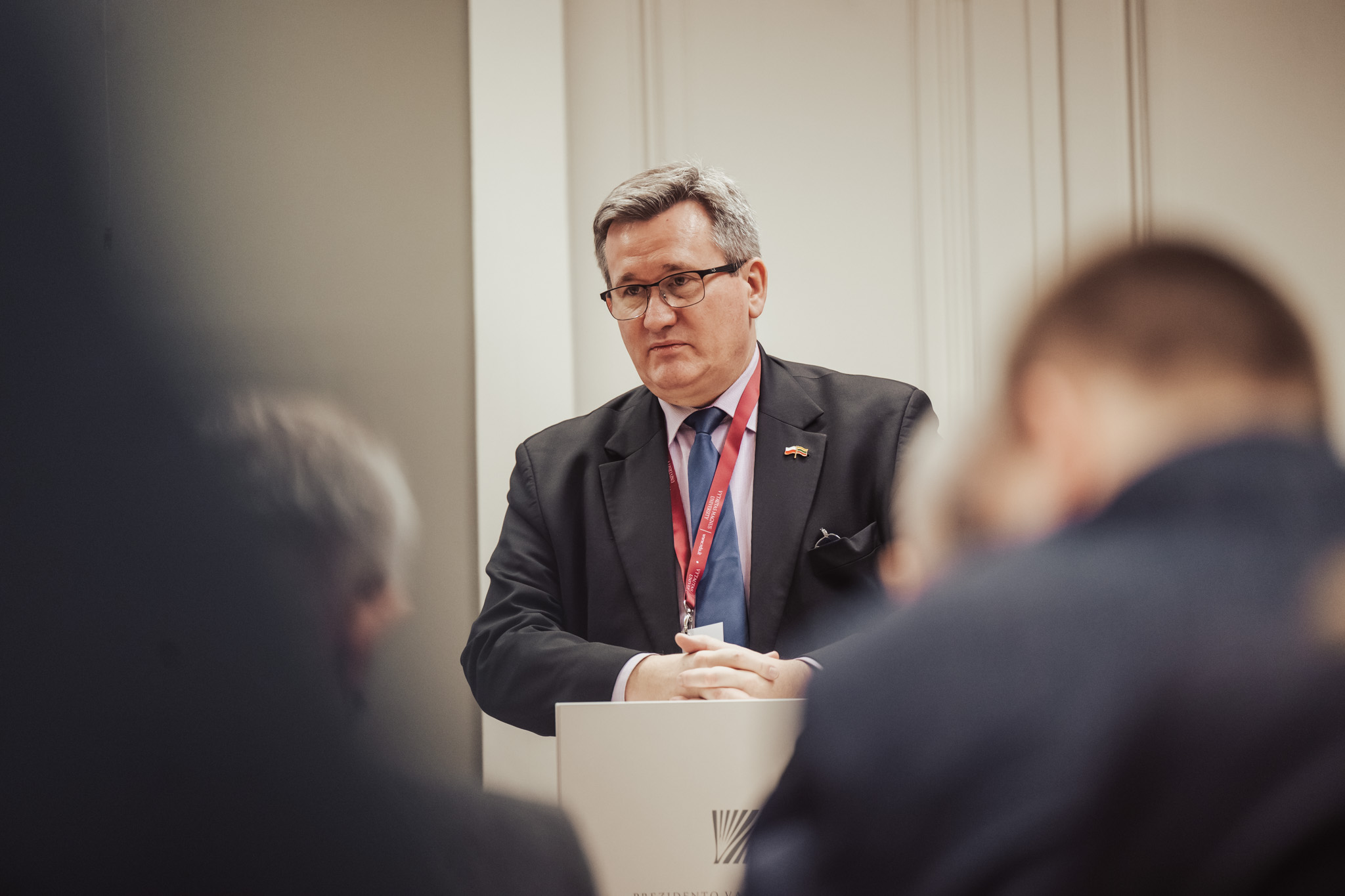
The Faculty of Political Science and Diplomacy at Vytautas Magnus University, in cooperation with the Ministry of Foreign Affairs of the Republic of Poland, the Center for Eastern European Studies at the University of Warsaw, and the Embassy of the Republic of Poland in Vilnius, organized the second international conference Poles Living in the Baltic States. From the 1863-1864 uprising to the 21st century: language, identity, culture, education.
“The international conference is dedicated to formulating recommendations for the development of Polish foreign policy, especially in the area concerning Poles living abroad. The conference focuses on issues of language, identity, culture, and education of Poles living in the Baltic states, examining them from a historical context to the present day,” says VDU Associate Professor Dr. Andžej Pukšto. The conference will begin on Thursday, November 27, at the Library-Museum of President Valdas Adamkus (S. Daukanto g. 25, Kaunas).
On Thursday, November 27, the conference has began at the Valdas Adamkus Library-Museum (S. Daukanto g. 25, Kaunas). After the opening of the conference, there will be an introductory session, followed by a visit to the Valdas Adamkus Library and Museum.
On Friday, November 28, there were four thematic sessions (V. Putvinskio g. 23). The first session will be devoted to historical topics, covering the views of Polish scholars and landowners on national movements. The second session will delve into Polish education, while the third session will analyze the political representation of the Polish national minority, identity, and community issues. After the sessions, participants will be invited to lay flowers at the monument to Antanas Mackevičius, and there will also be an excursion entitled “Traces of Poles in Kaunas.”
On Saturday, November 29, the fifth session took place (V. Putvinskio g. 23), during which the activities of Polish associations, the teaching of the Polish language, and demographic changes will be discussed.
The conference languages were Polish and English.










The Faculty of Political Science and Diplomacy and the Embassy of Poland present the exhibition “The Eyes of War” – a symbol of solidarity with Ukraine
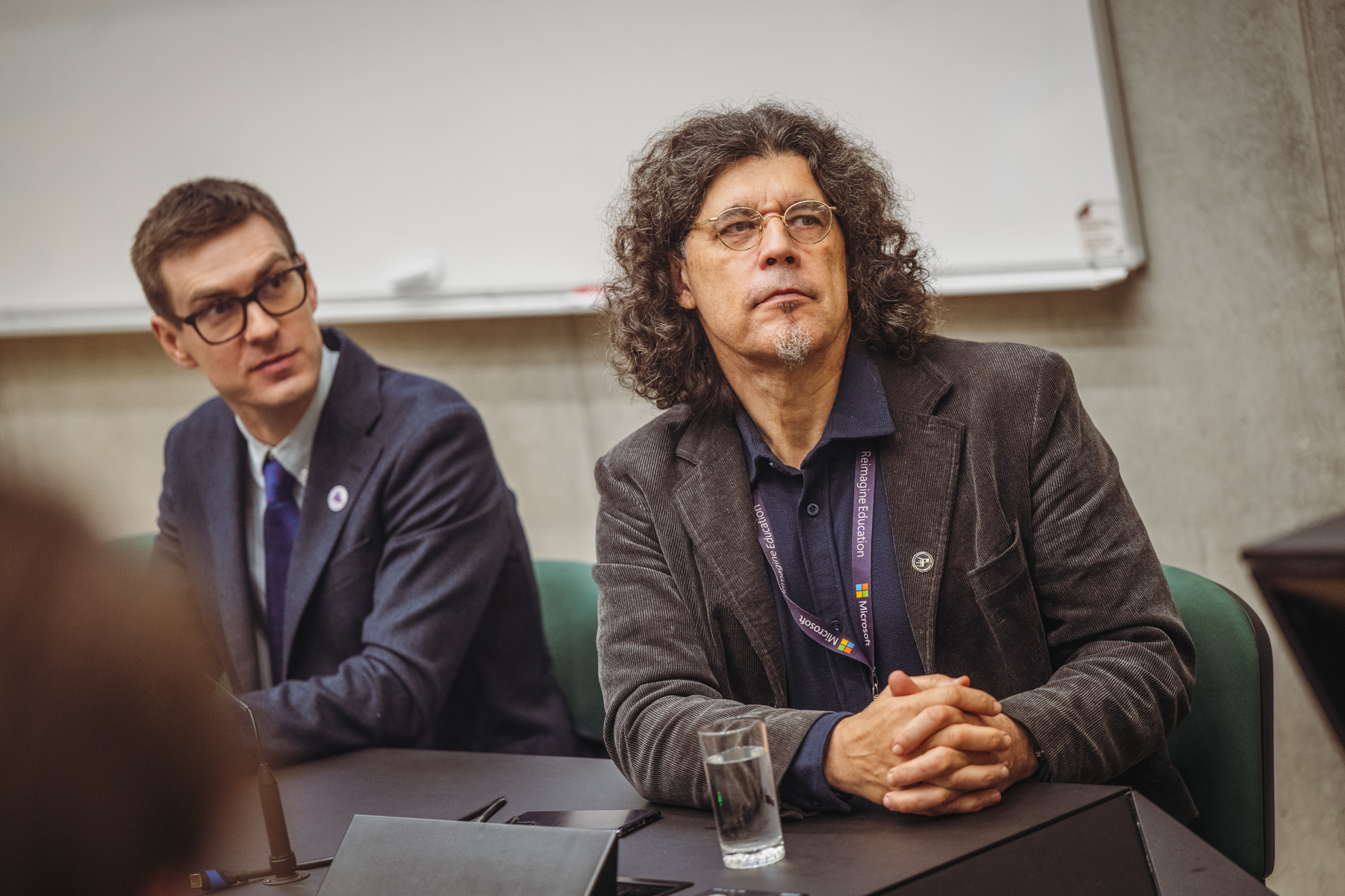
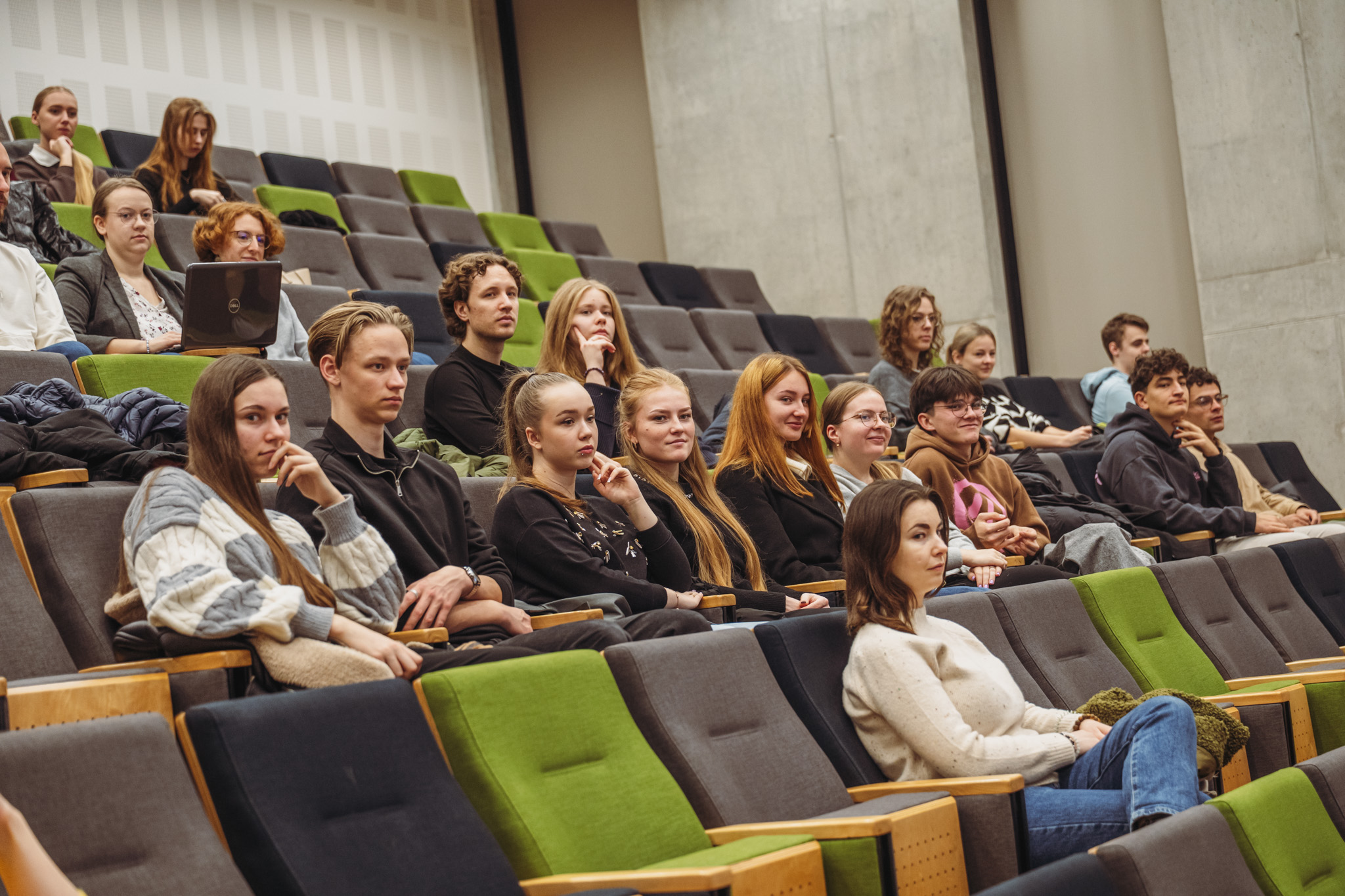
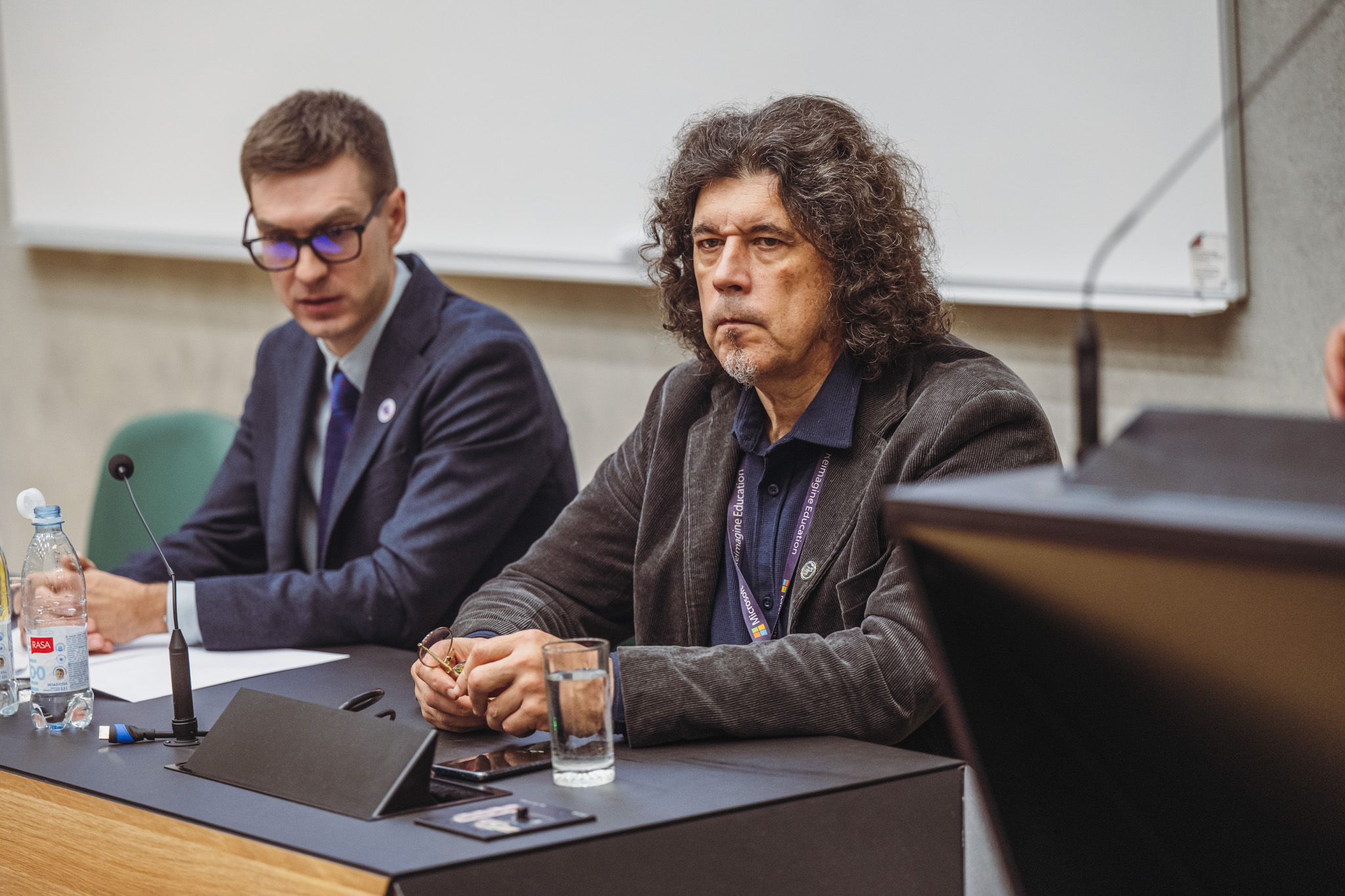
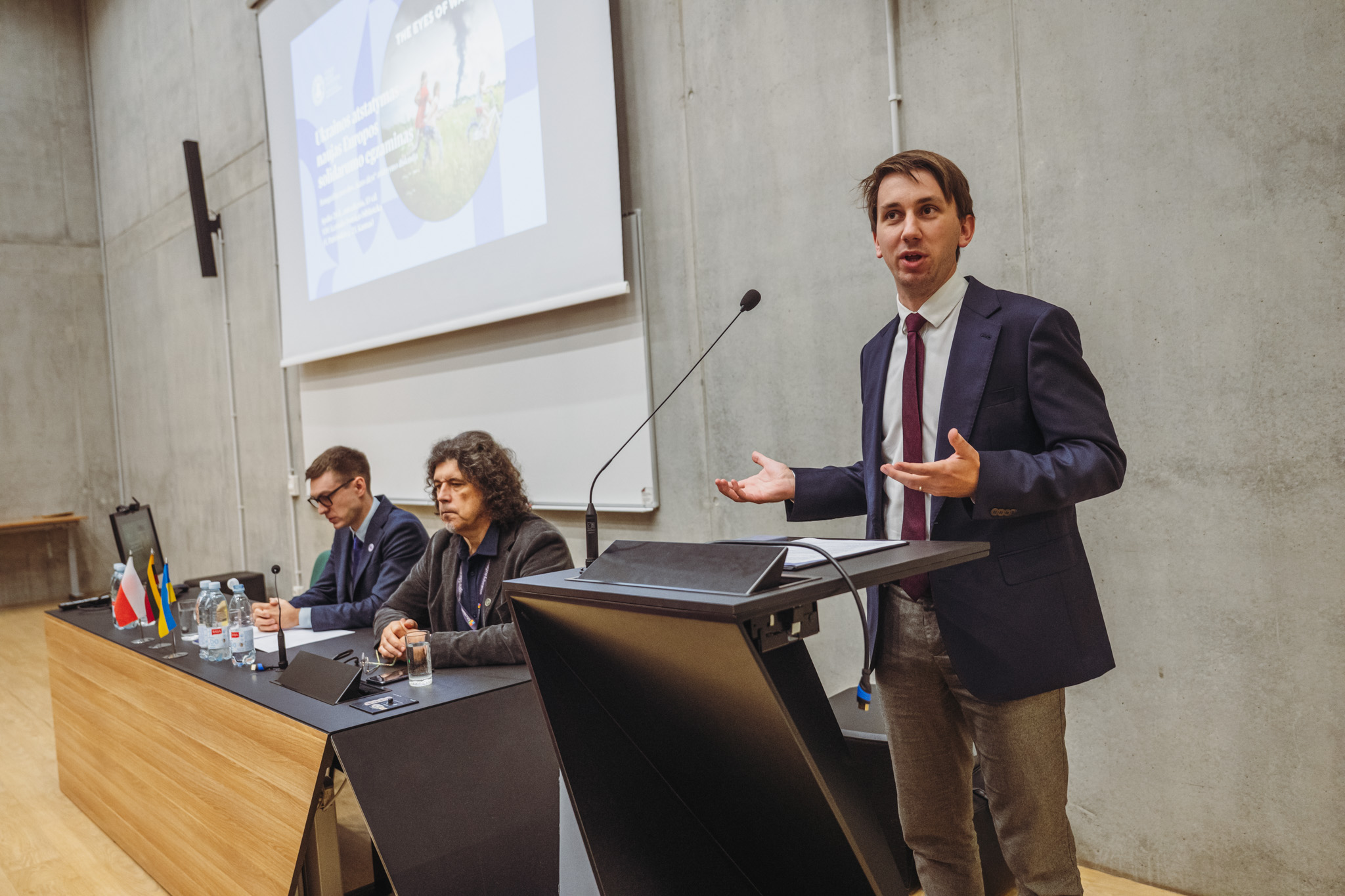
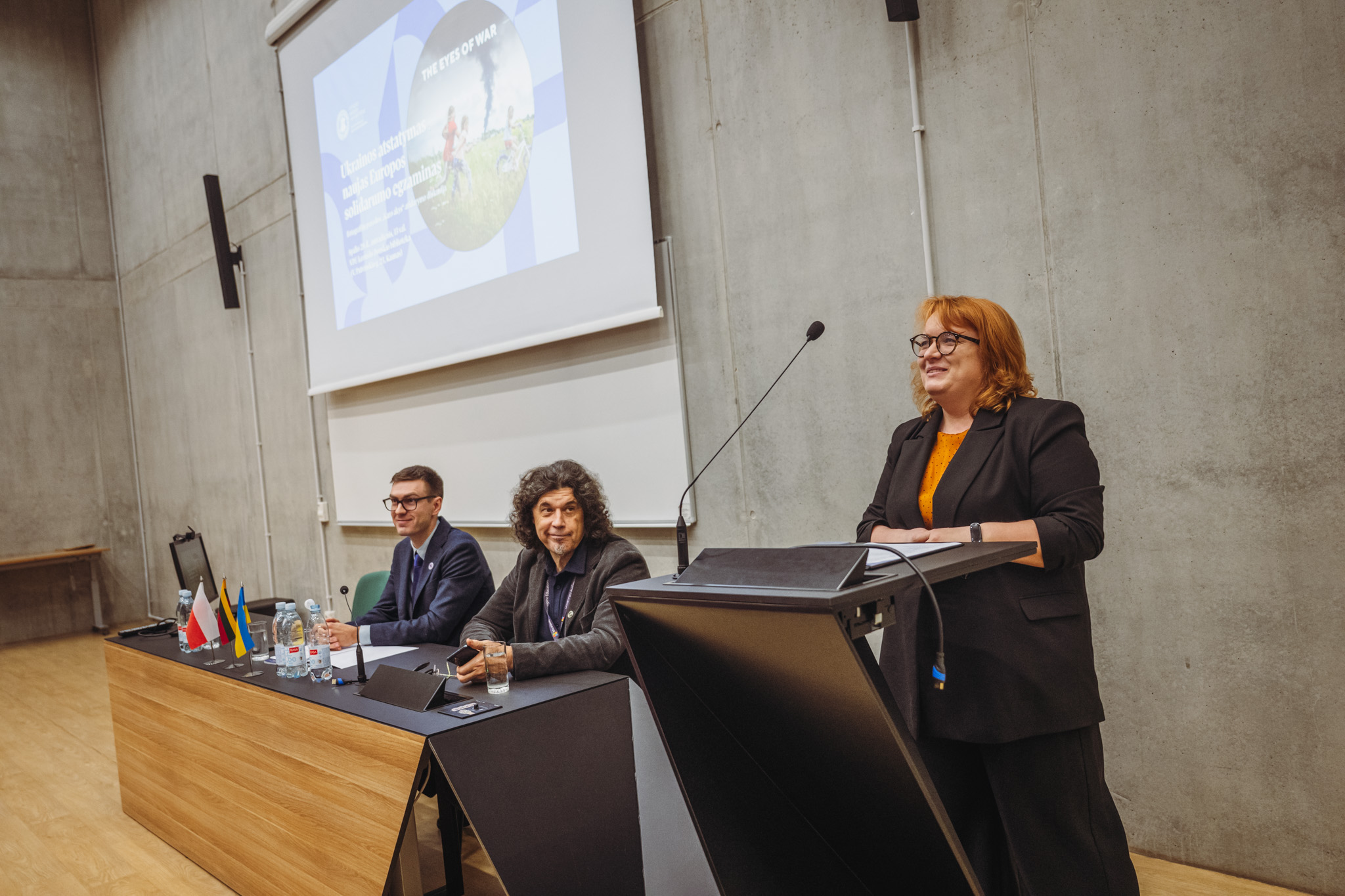
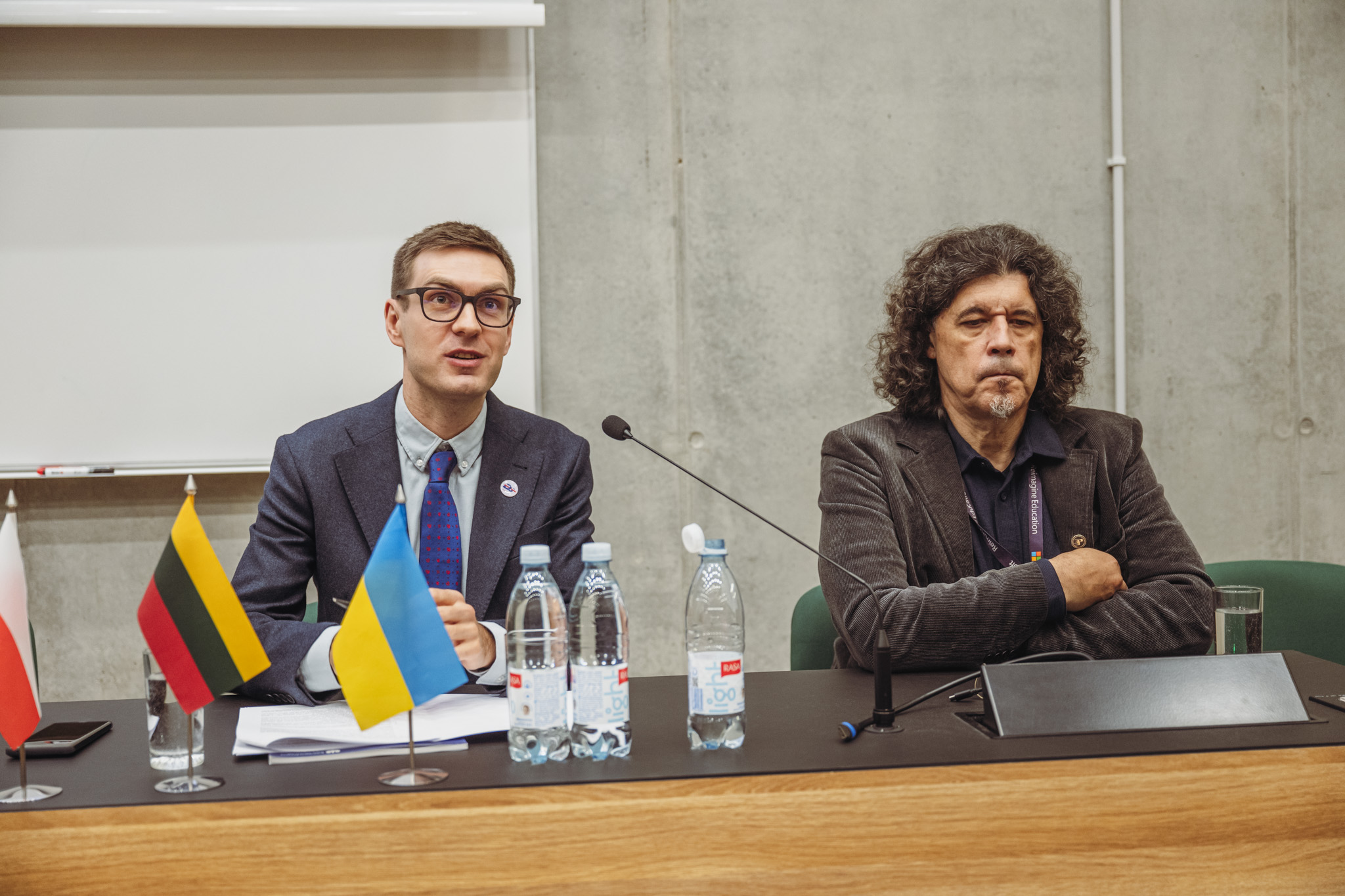
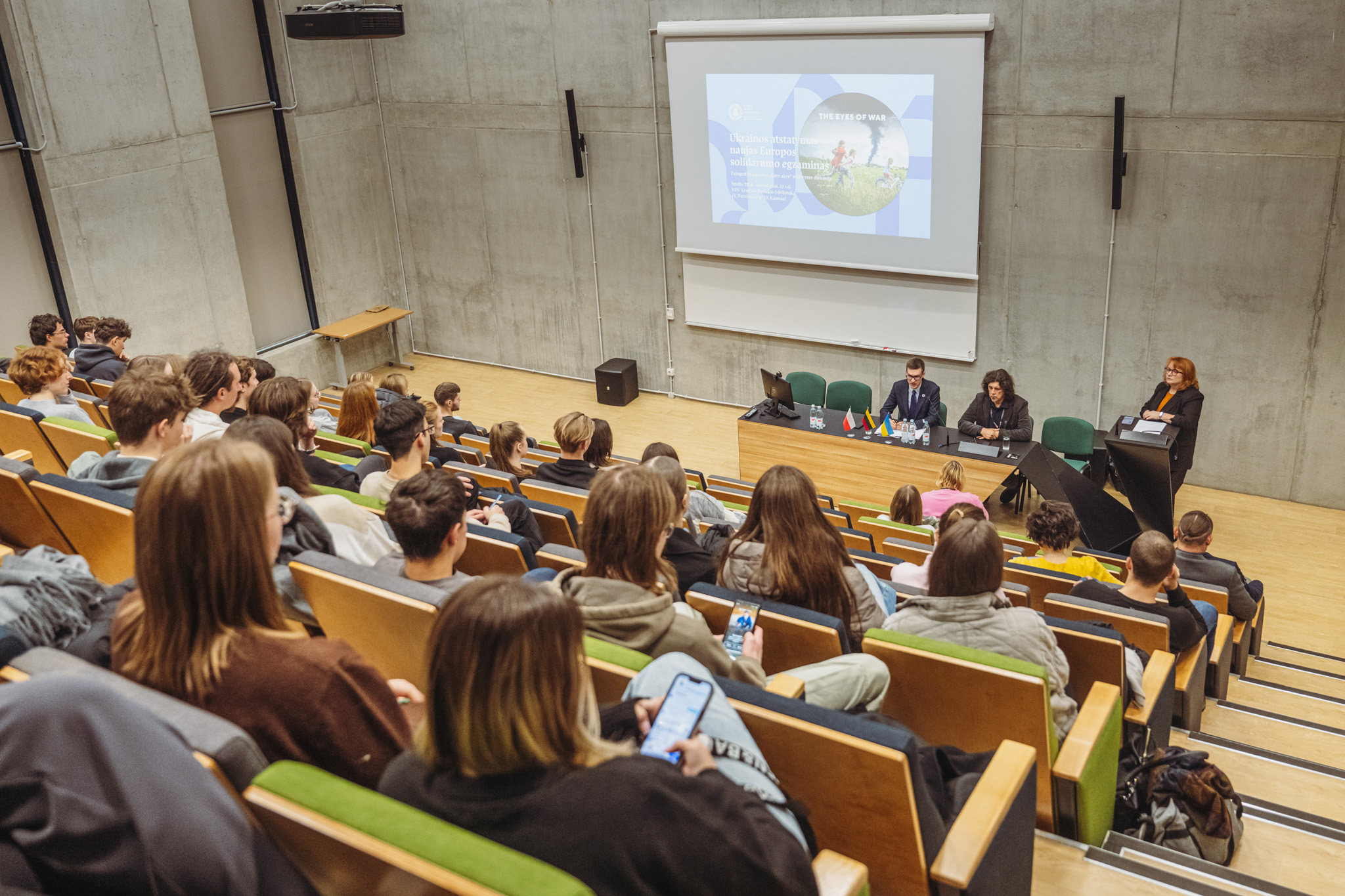
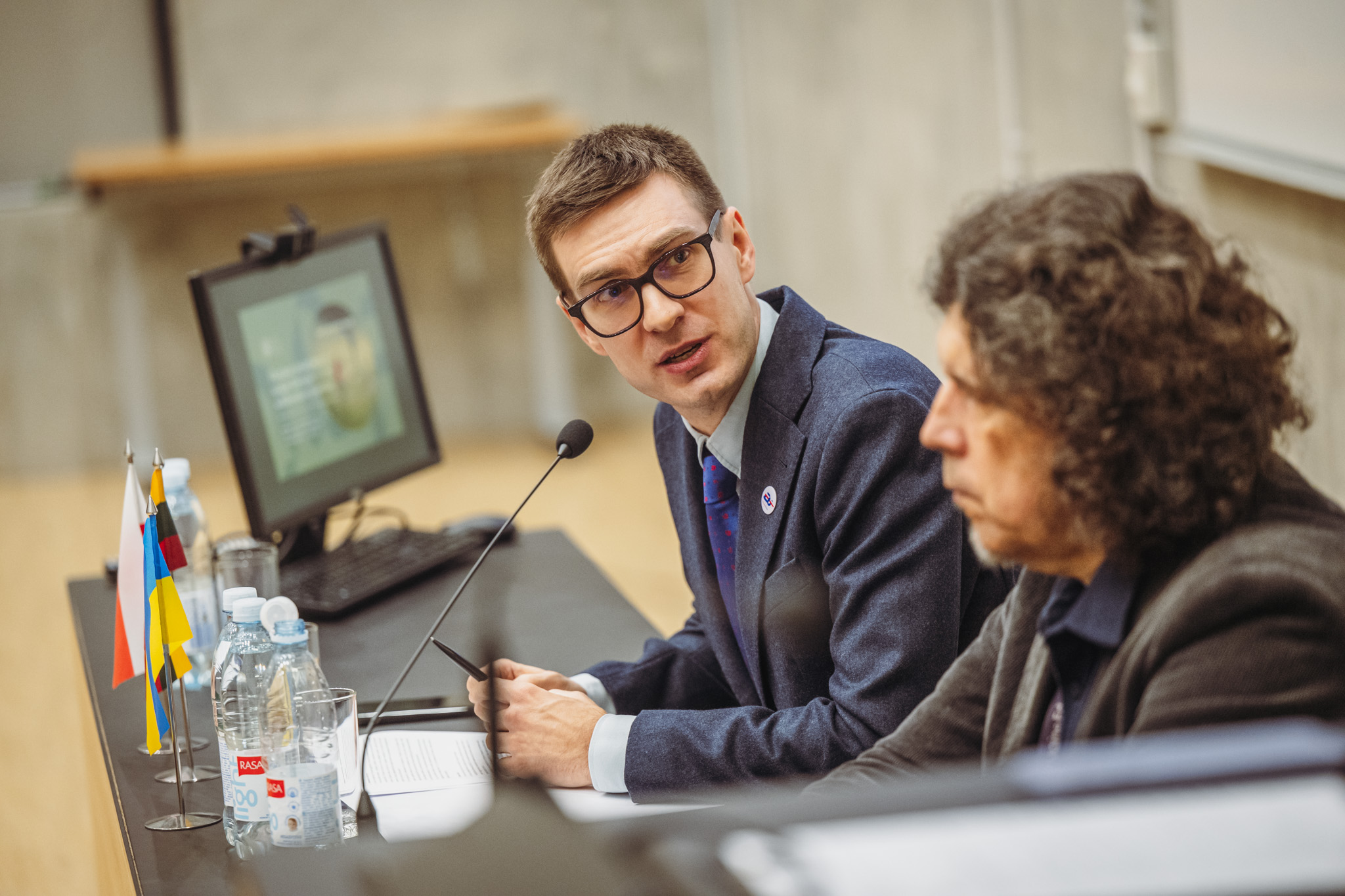
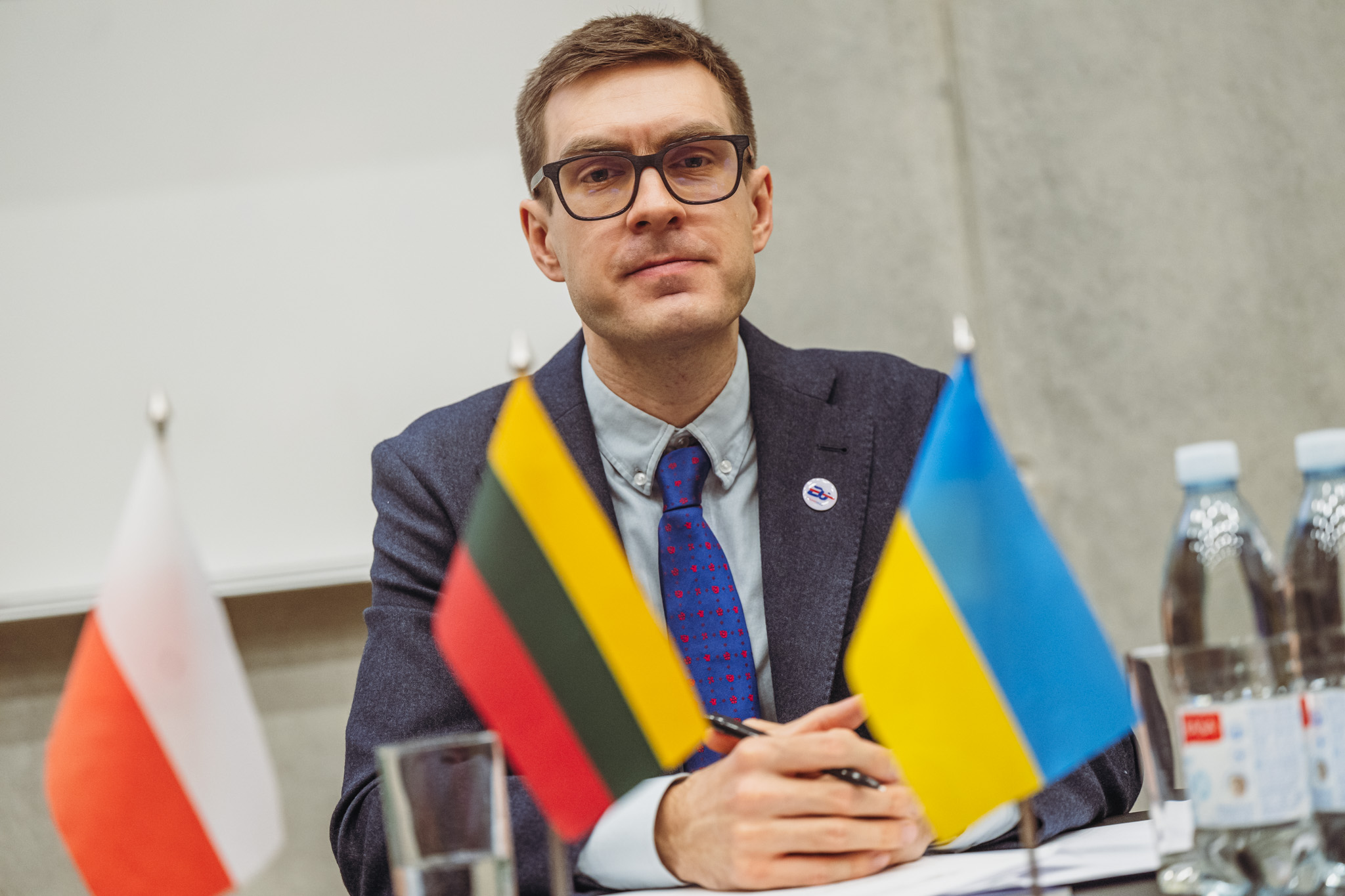
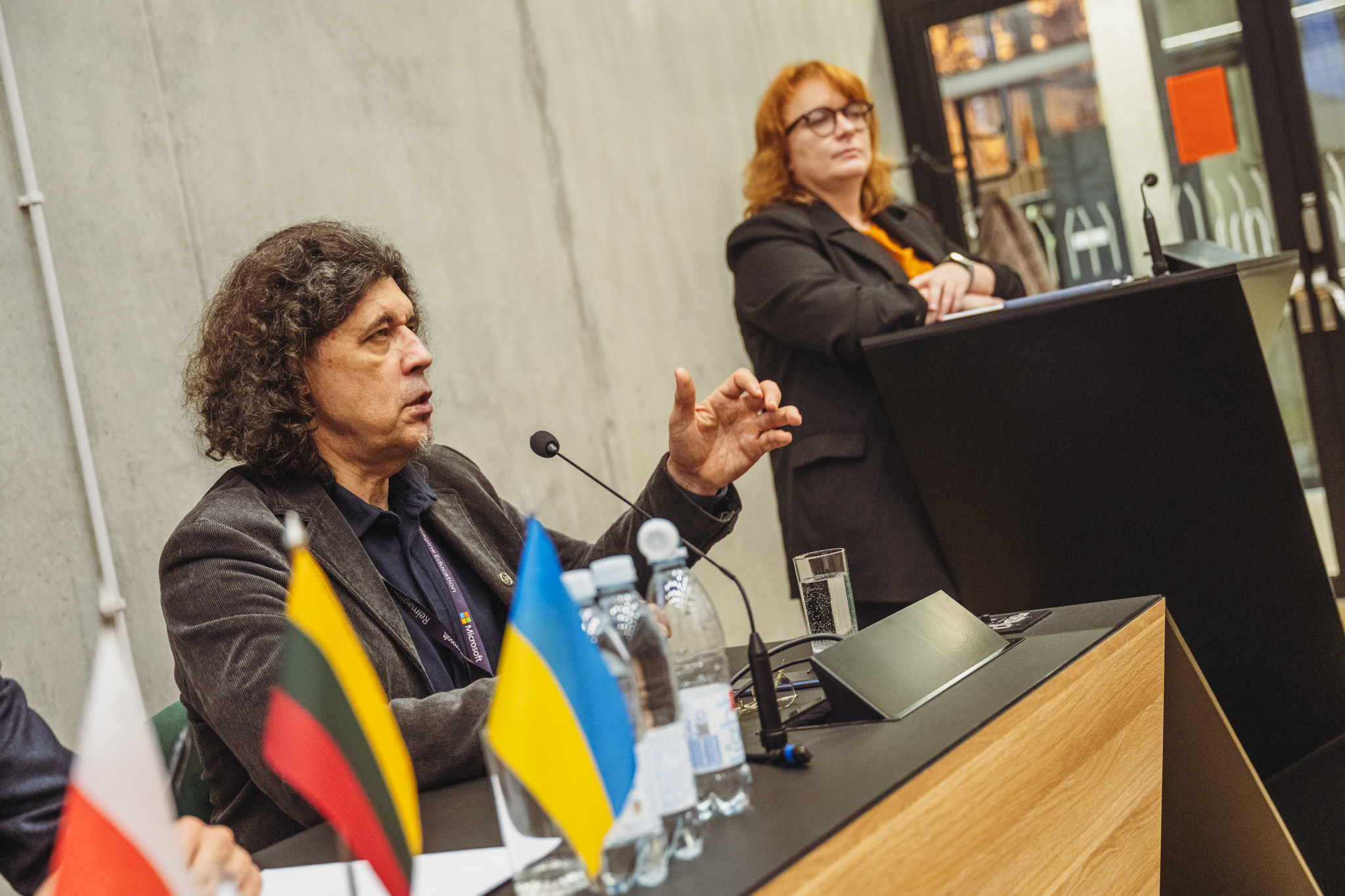
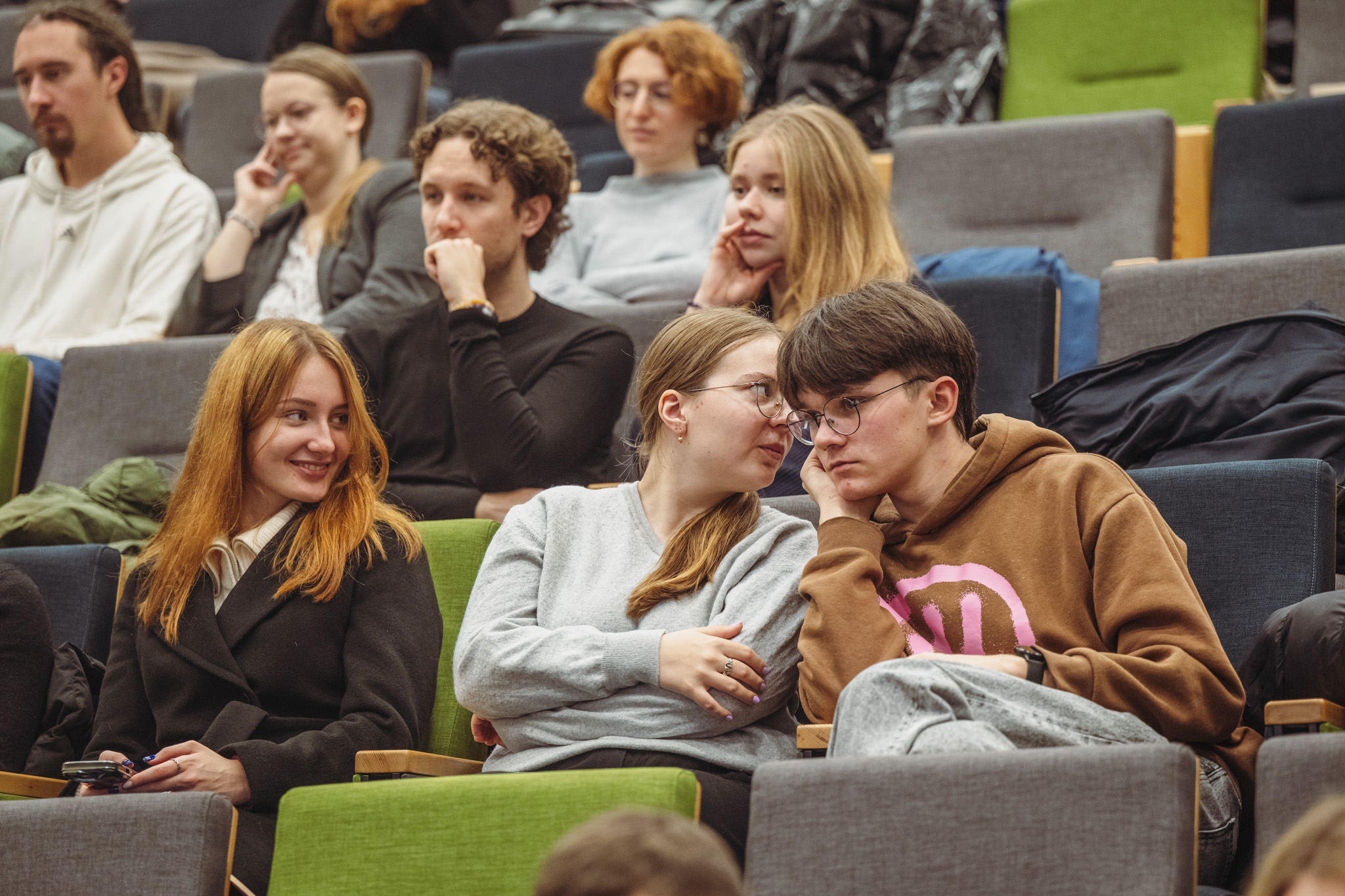
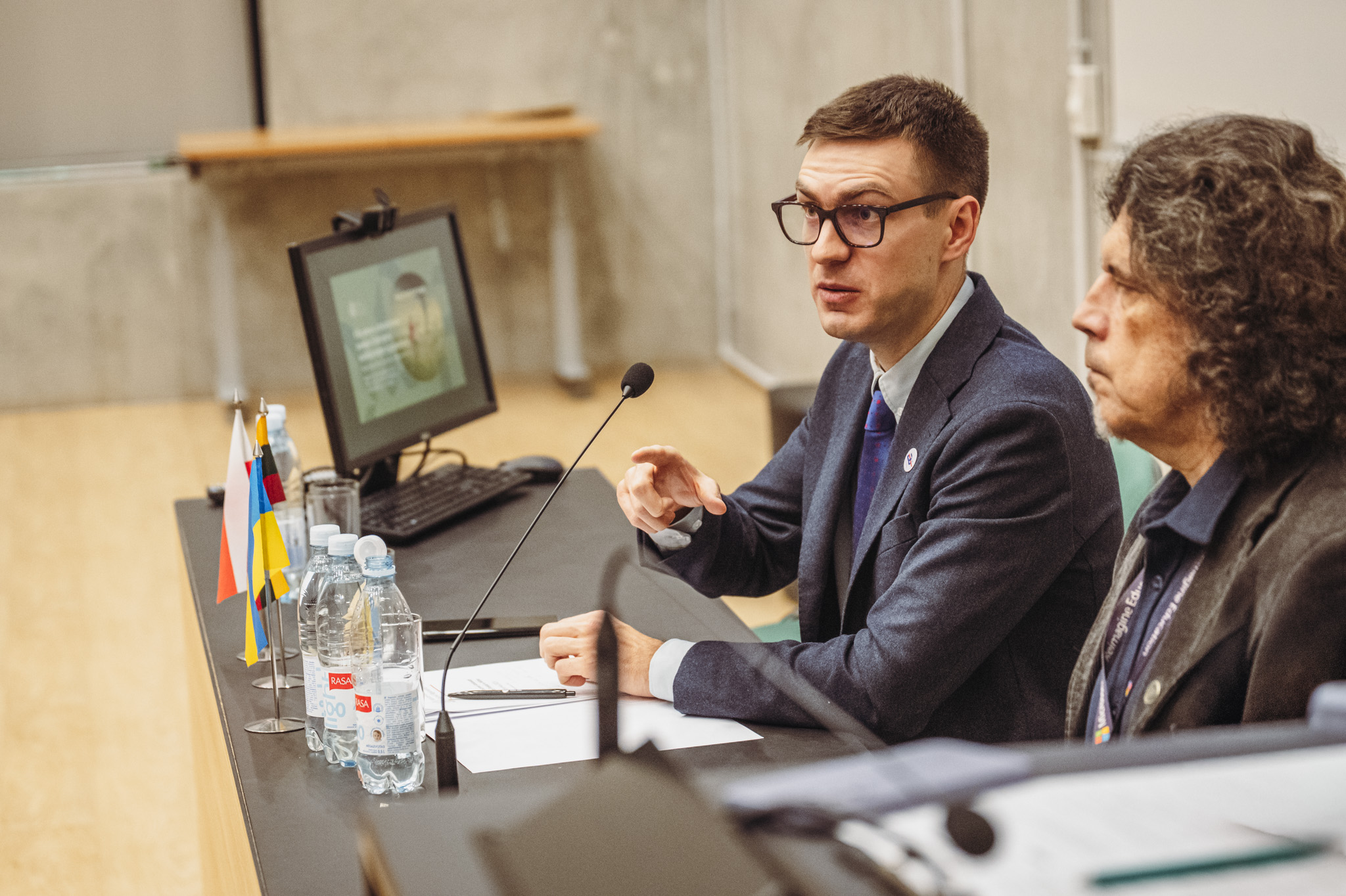
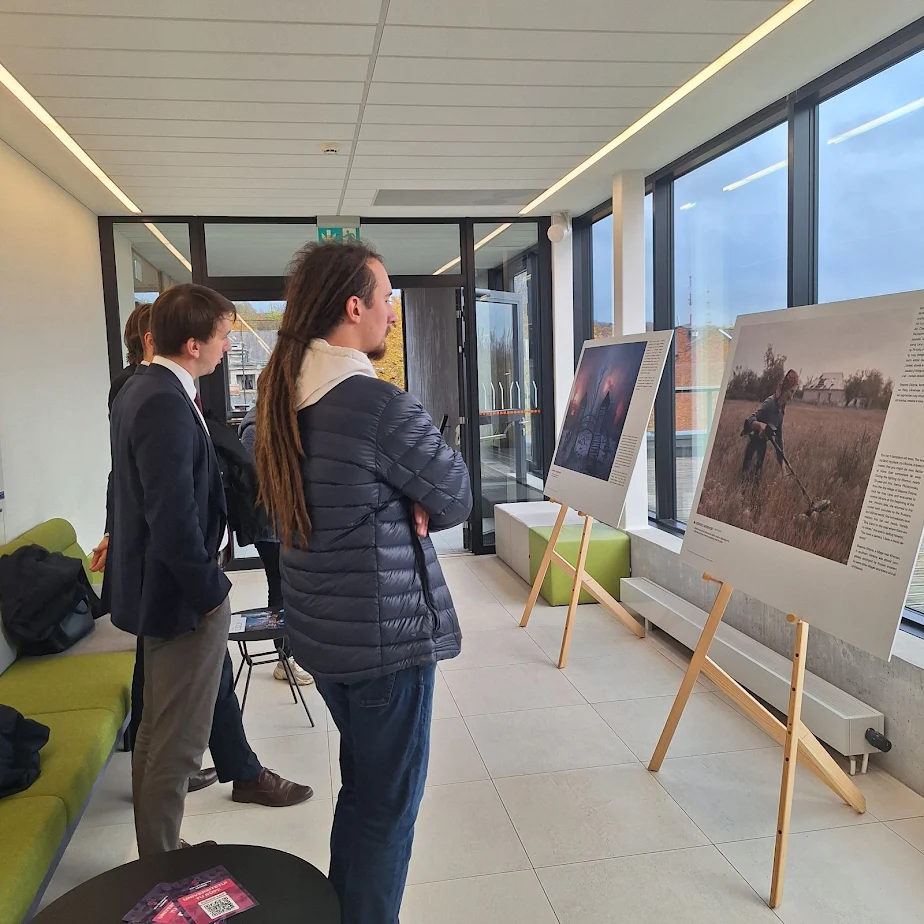
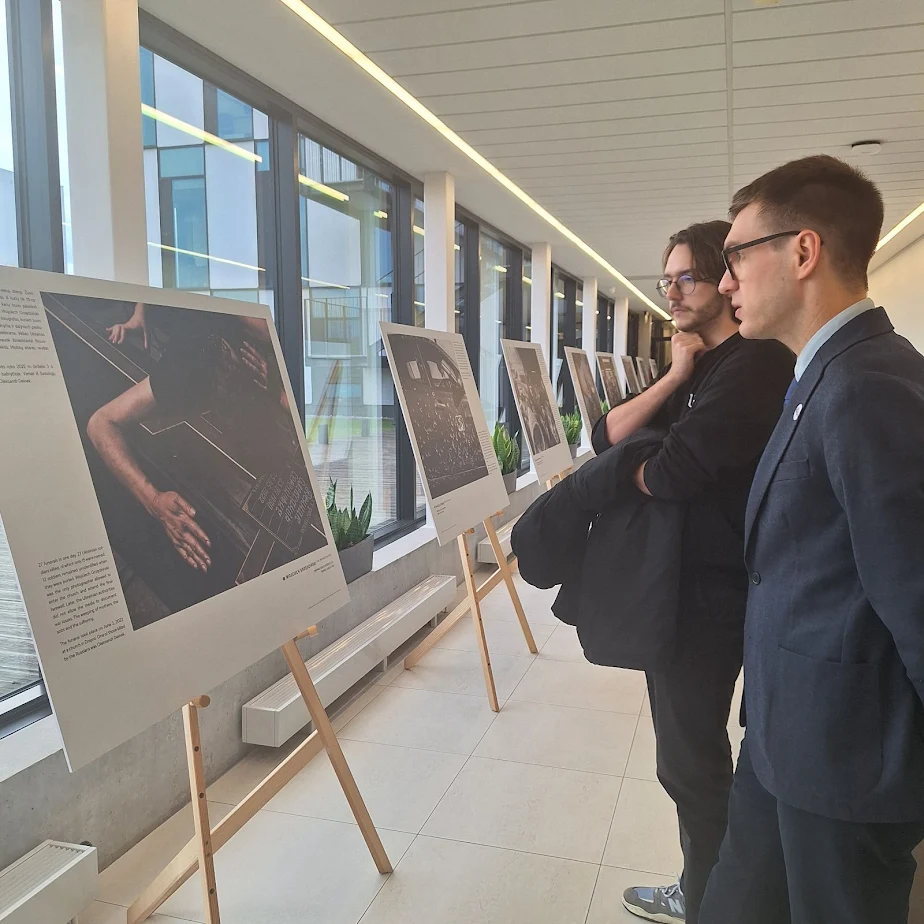
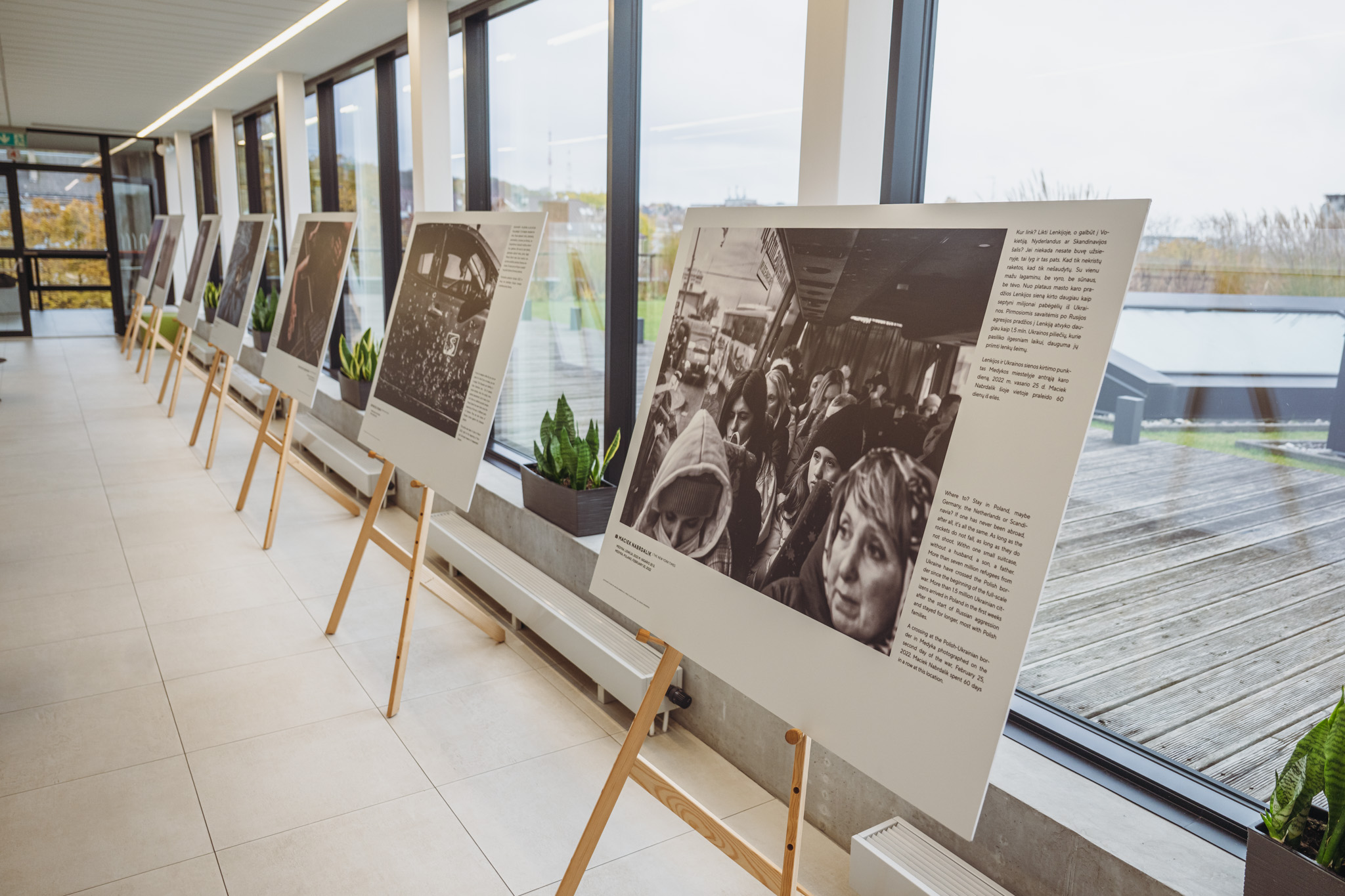
At the Faculty of Political Science and Diplomacy of Vytautas Magnus University (VMU FPSD), a discussion titled “Ukraine’s Reconstruction – A New Test of European Solidarity” took place, along with the opening of the photo exhibition “The Eyes of War.”
The discussion featured Marcin Chruściel, Director of the Polish and Ukrainian Development Cooperation Office at Poland’s Ministry of Funds and Regional Policy; Prof. Gintautas Mažeikis, Head of the VMU Centre for Social and Political Critique; and Wojciech Kłyś, Third Secretary of the Embassy of the Republic of Poland in Vilnius. The event was moderated by Aistė Žemaitytė, Vice-Dean of the VMU Faculty of Political Science and Diplomacy.
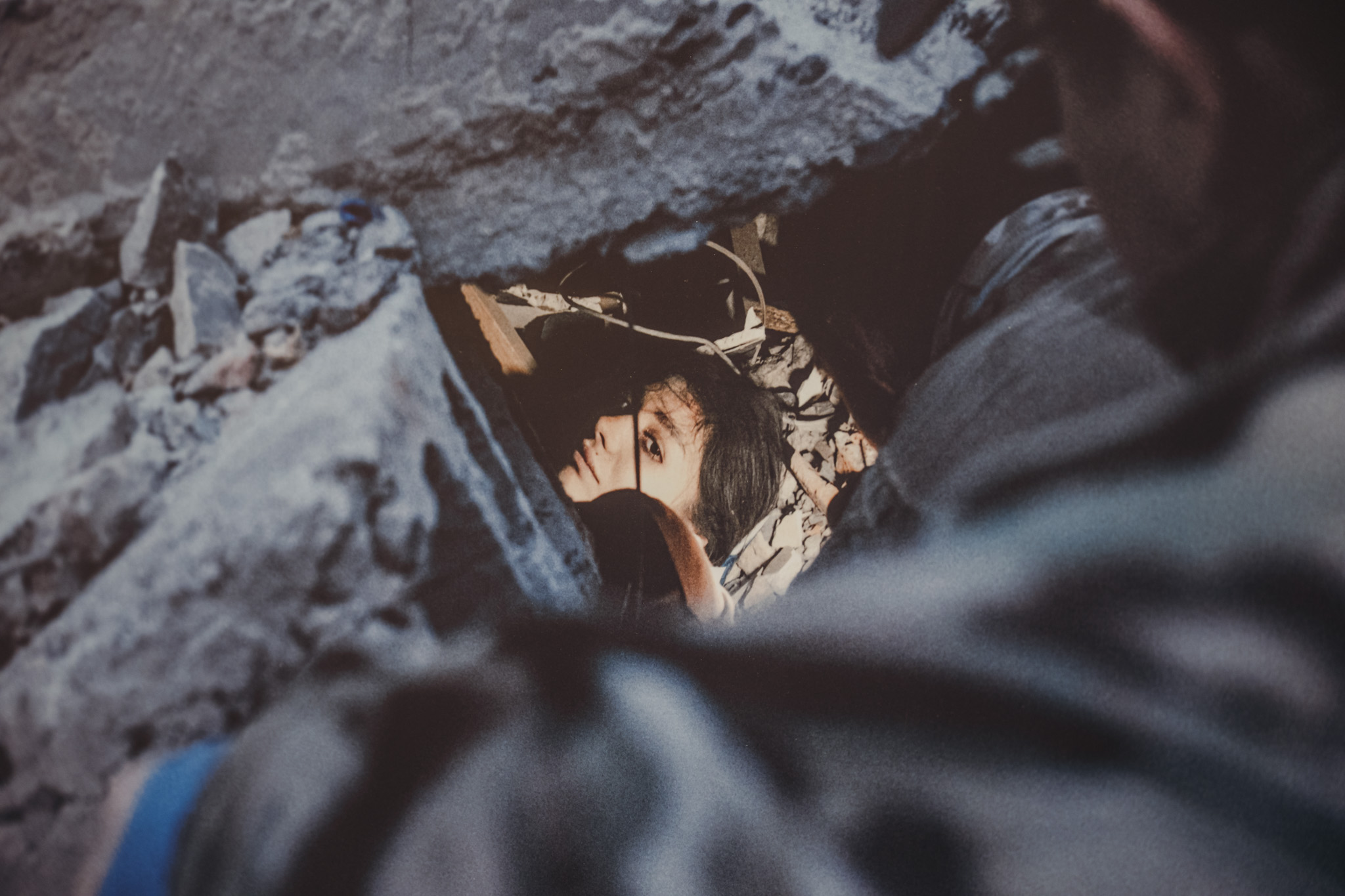
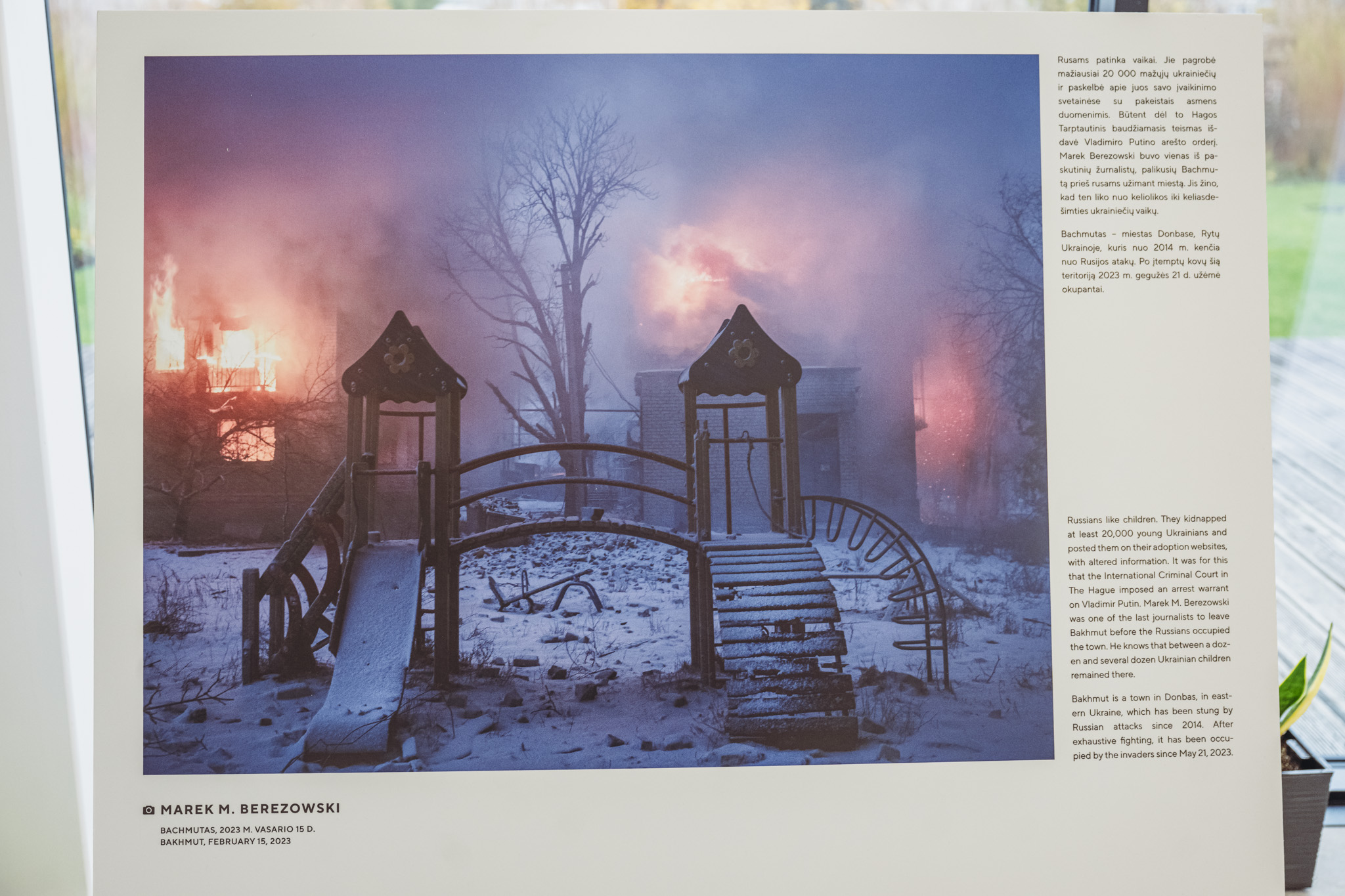
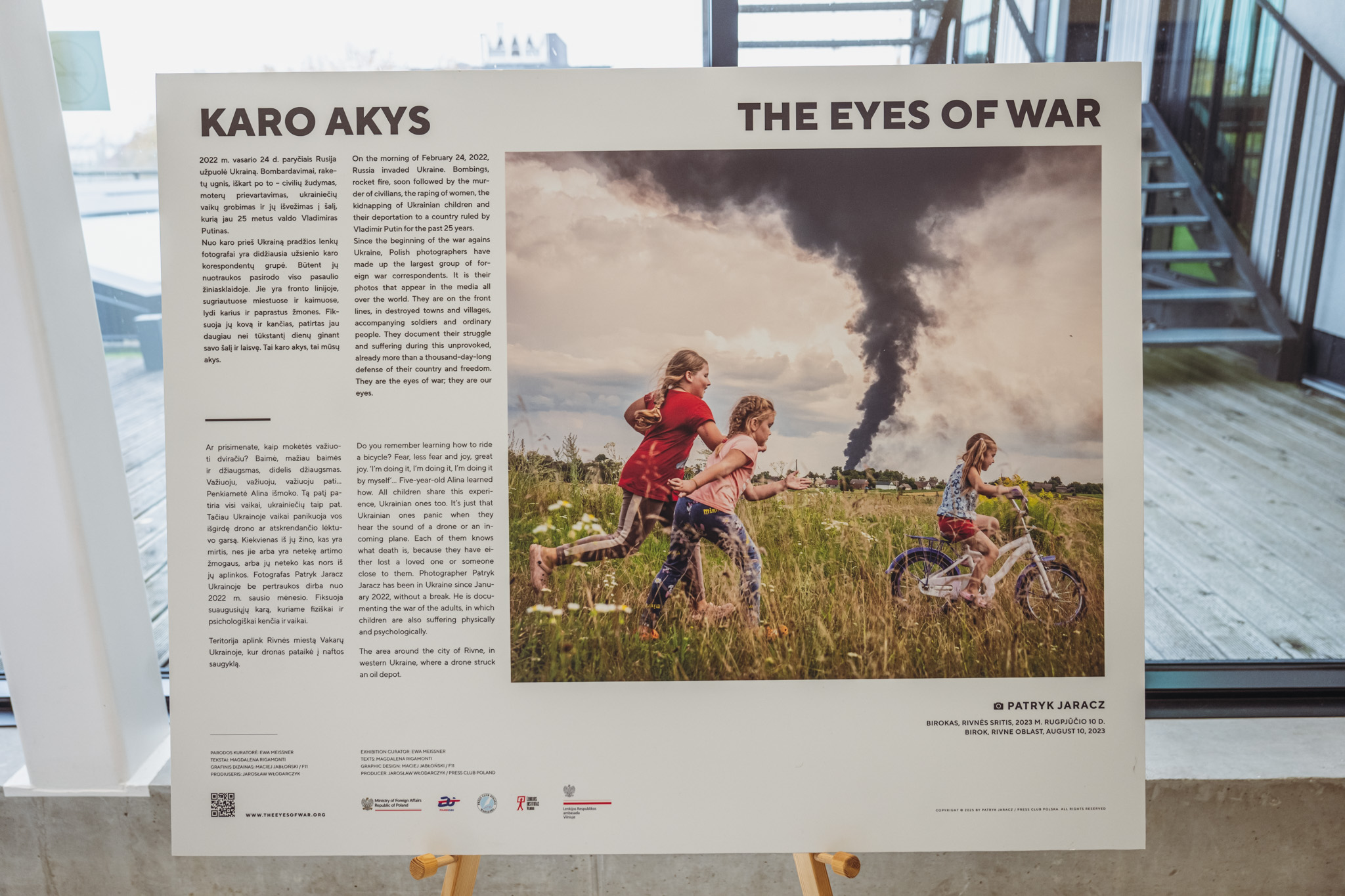
The exhibition, revealing the realities of Russia’s invasion of Ukraine, was prepared by the Ministry of Foreign Affairs of the Republic of Poland in cooperation with PRESS CLUB POLAND. Since the beginning of the war against Ukraine, Polish photographers have become one of the largest groups of foreign war correspondents working in the conflict zone. Their photographs document the realities of the front line, destroyed cities and villages, the experiences of civilians and soldiers, and the thousand-day-long struggle for freedom.
Aistė Žemaitytė, Vice-Dean of VMU FPSD, who organized and coordinated this initiative, emphasized its academic and civic importance: “This exhibition is not only a visual testimony of war but also an expression of our academic community’s solidarity with Ukraine. Freedom and peace in Europe are not self-evident – we must protect, support, and discuss them, especially within the university space, where critical thinking and civic responsibility are shaped.”
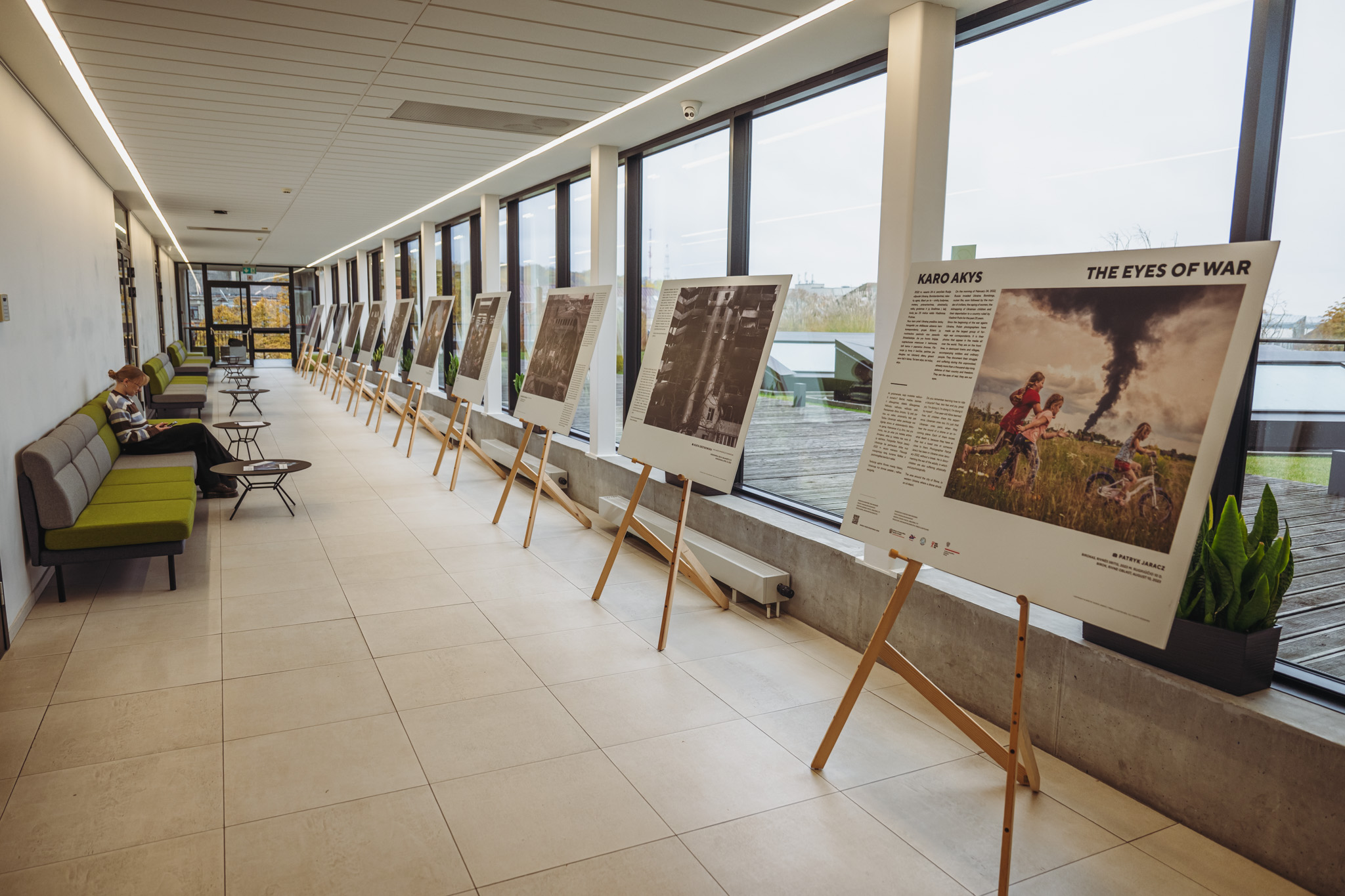
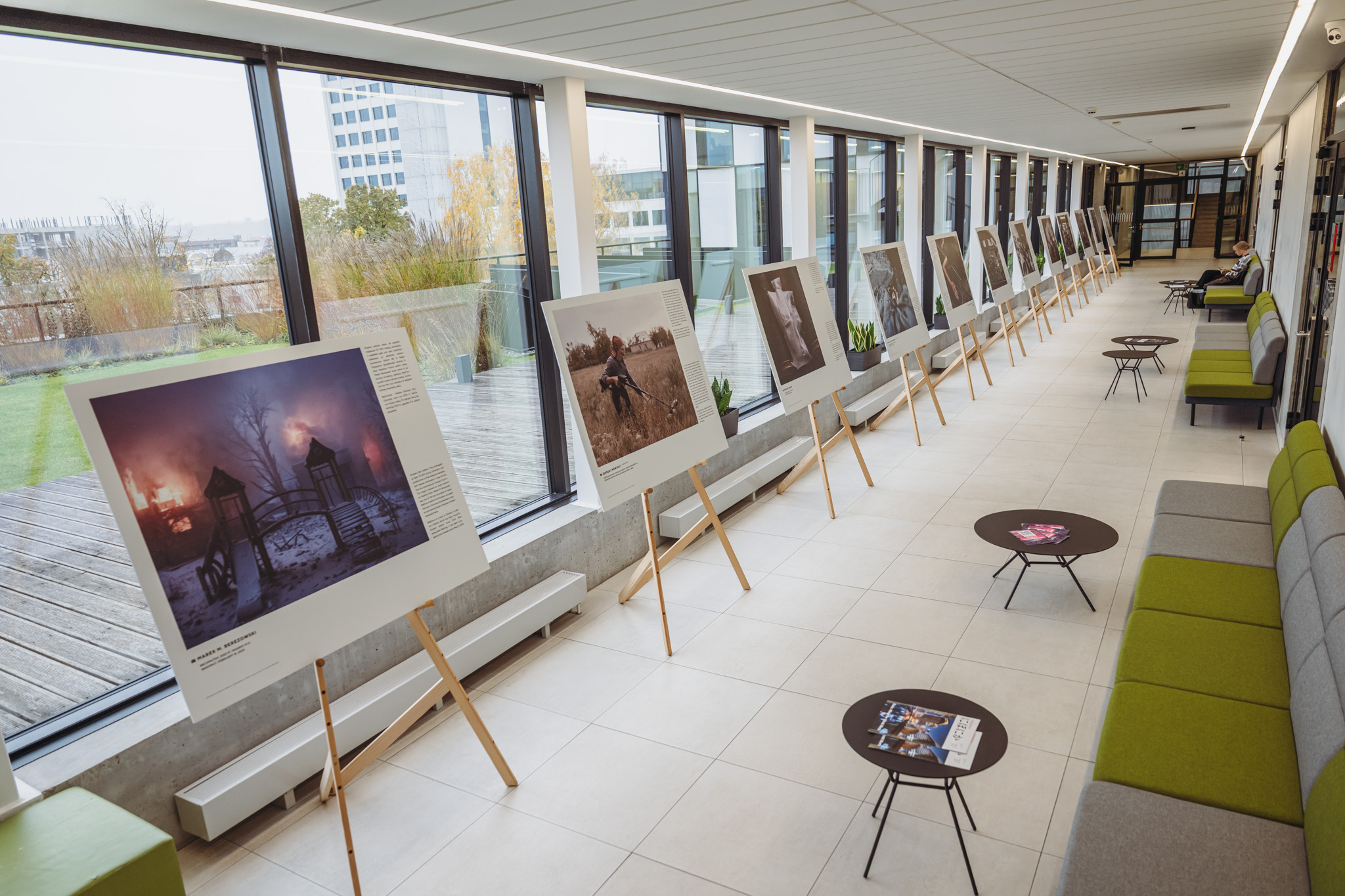
The photo exhibition is on display at the 4th-floor foyer of the VMU Faculty of Political Science and Diplomacy (V. Putvinskio St. 23, Kaunas).
Visitors are welcome to view the exhibition until November 24, 2025.
Event photos by J. Petronis.
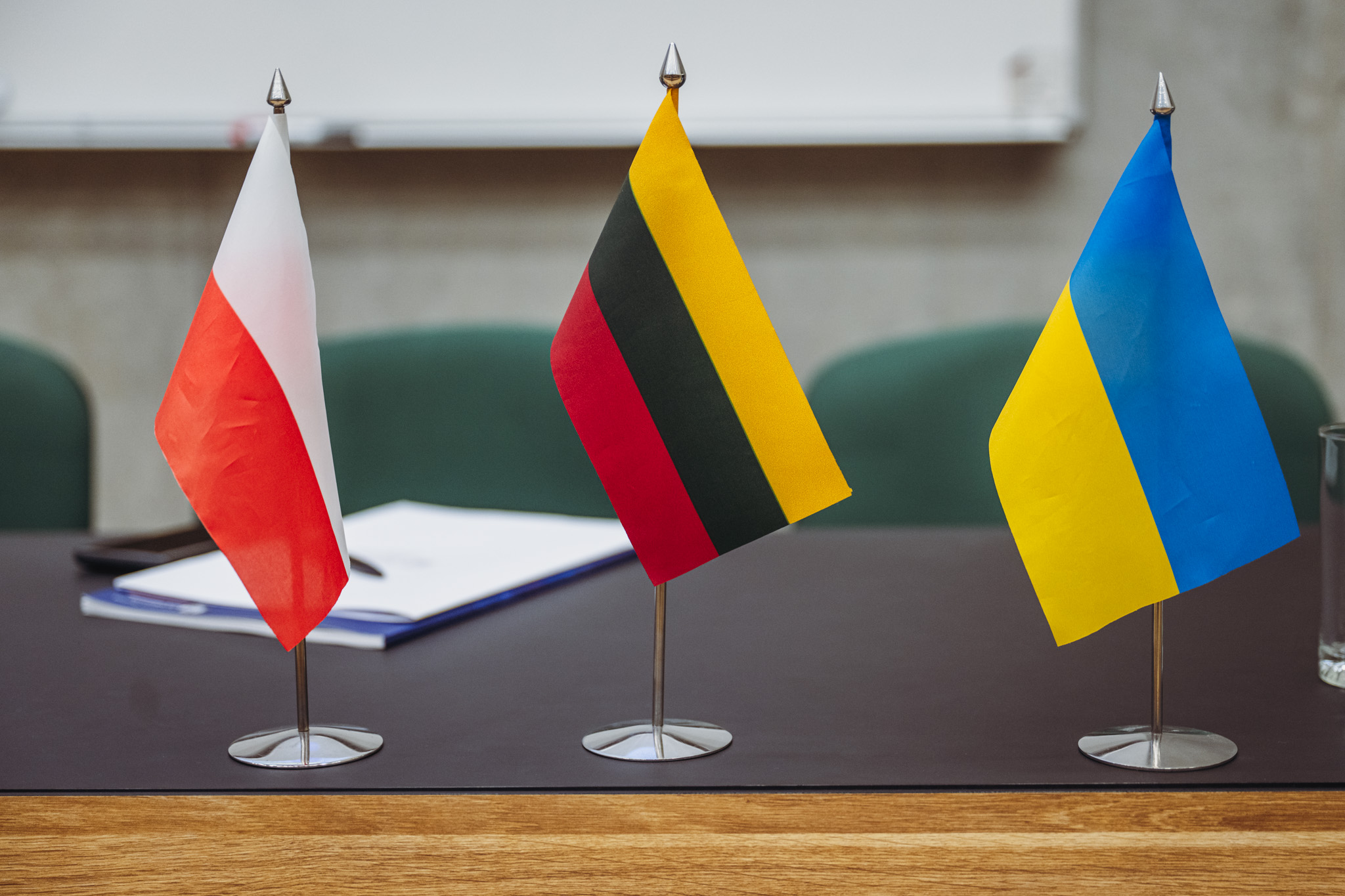
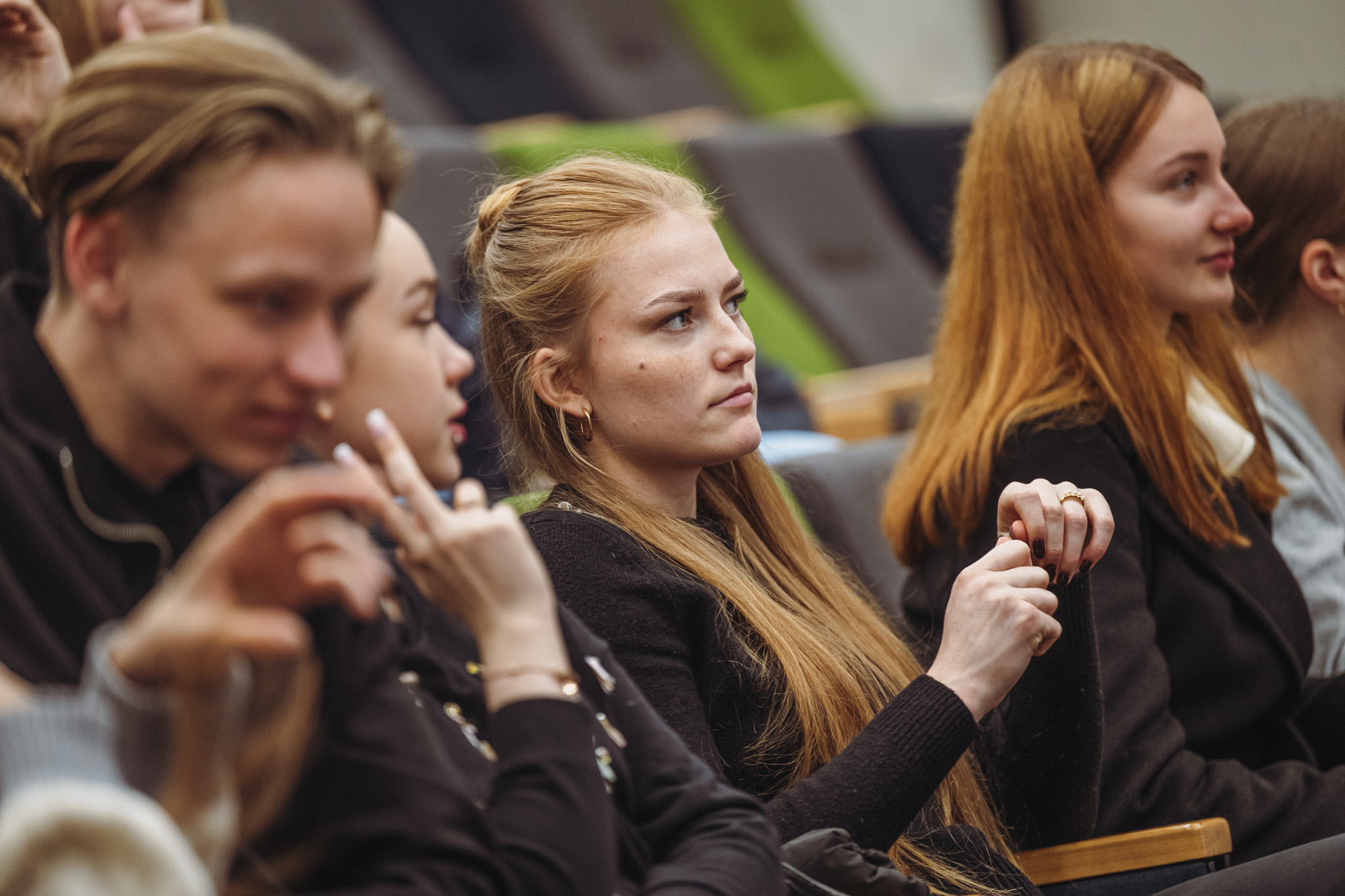
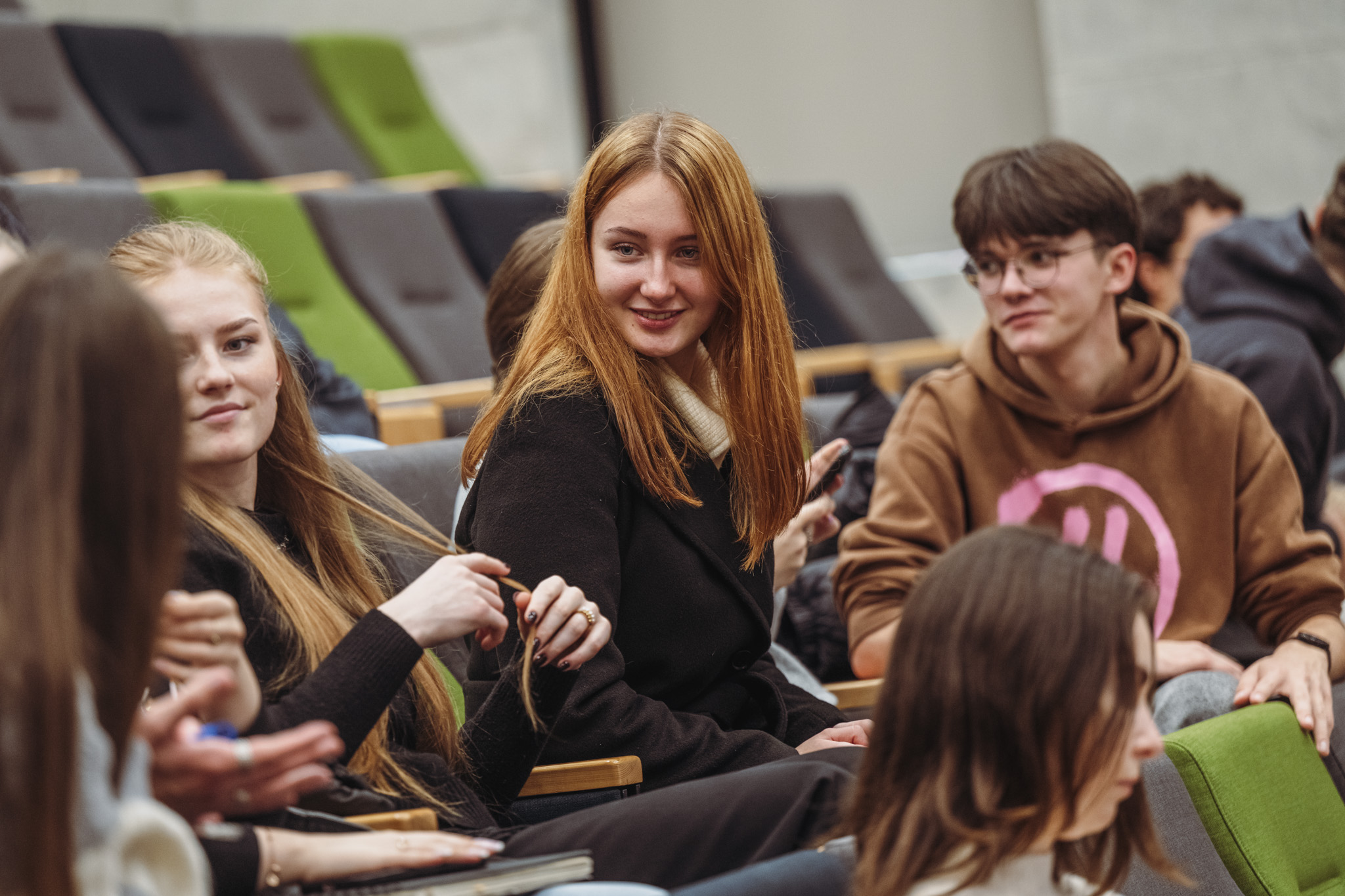
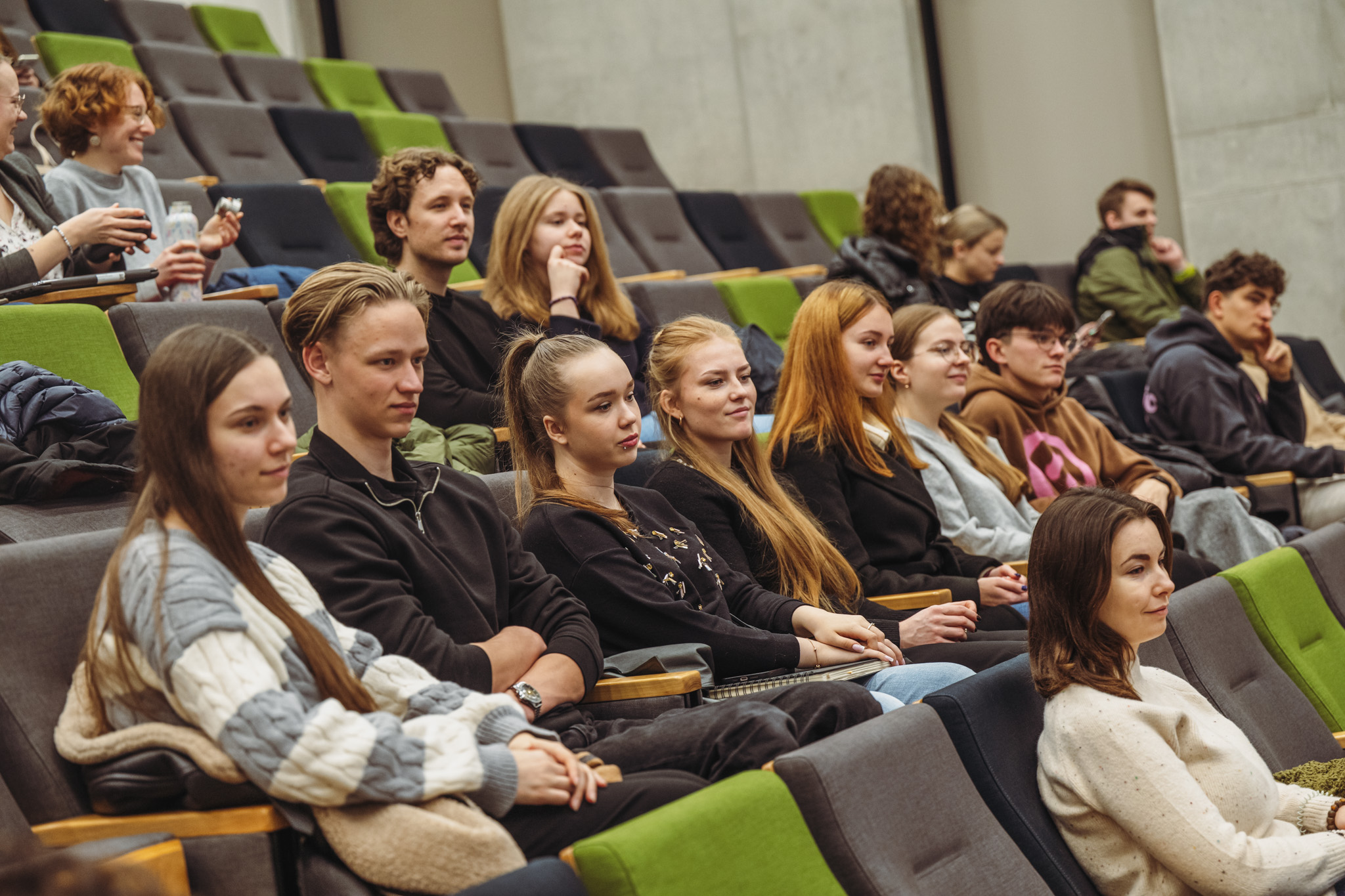
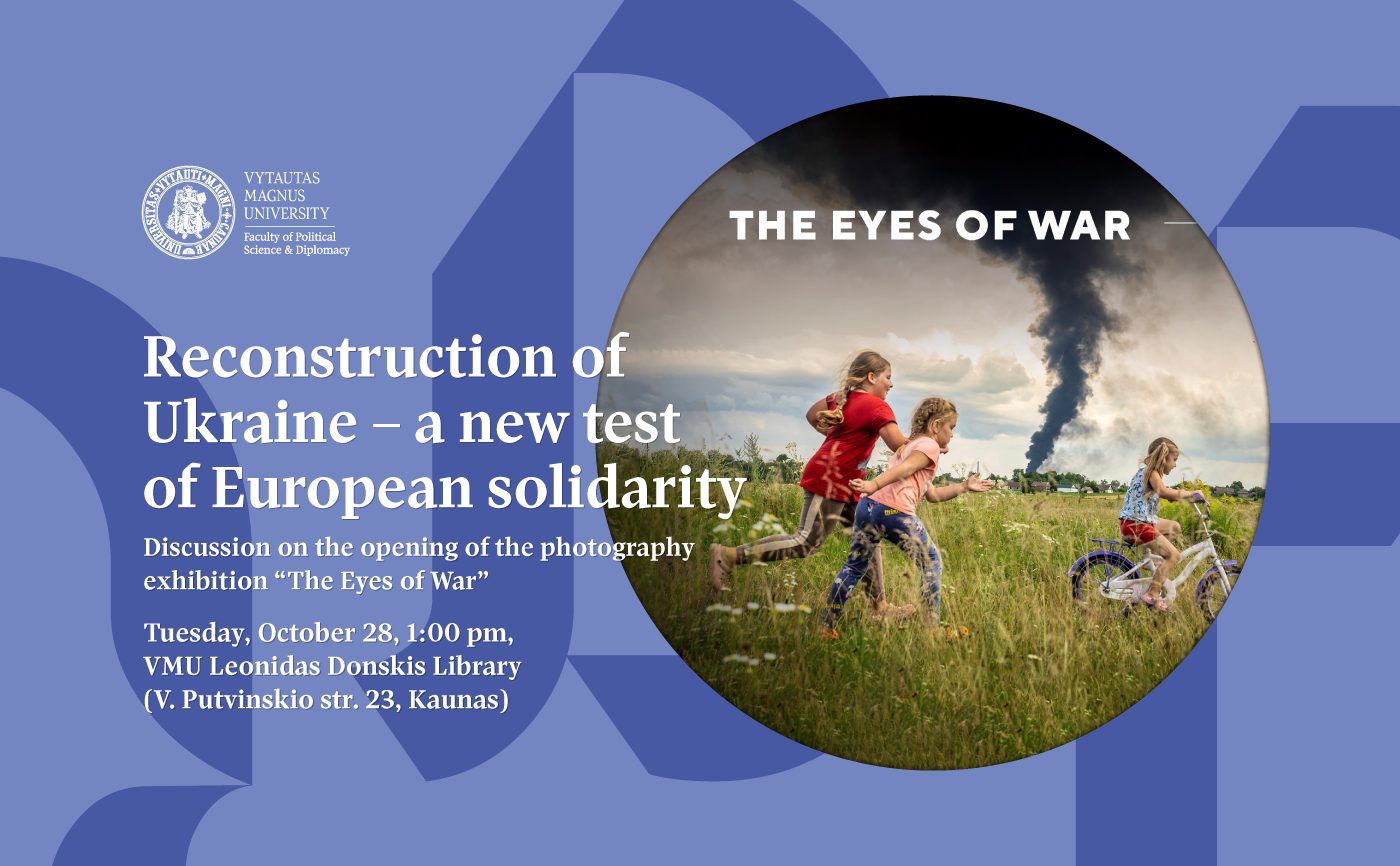
VMU Invites to a Discussion and Photography Exhibition on The Reconstruction of Ukraine and European Solidarity
The Faculty of Political Science and Diplomacy at Vytautas Magnus University invites to a discussion “The reconstruction of Ukraine – a new test of European solidarity” and the opening of a photography exhibition dedicated to Russia’s large-scale invasion of Ukraine.
The discussion will take place on October 28, 2025 (Tuesday) at 1:00 p.m. at the VDU Leonidas Donskis Library (V. Putvinskio g. 23, Kaunas).
The event will be attended by:
- Marcin Chruściel, Director of the Polish-Ukrainian Development Cooperation Office, Ministry of Funds and Regional Policy of Poland;
- Prof. Gintautas Mažeikis, Head of the Center for Social and Political Criticism at Vytautas Magnus University.
The discussion will be moderated by Aistė Žemaitytė, Vice-Dean of the Faculty of Political Science and Diplomacy at Vytautas Magnus University. Representatives of the Embassy of the Republic of Poland in Vilnius are also participating in the event.
After the discussion, we invite you to visit the photo exhibition, which will be on display in the foyer on the 4th floor of the Faculty of Political Science and Diplomacy at Vytautas Magnus University (V. Putvinskio g. 23).
The exhibition, marking Russia’s invasion of Ukraine, was prepared by the Ministry of Foreign Affairs of the Republic of Poland in cooperation with PRESS CLUB POLAND. Since the beginning of the war against Ukraine, Polish photographers have become one of the largest groups of foreign war correspondents working in the conflict zone. Their photos are regularly published in the international media, bearing witness to the reality of the front line, destroyed towns and villages, the experiences of civilians and soldiers, and the thousand-day struggle for freedom.
The exhibition at VDU is organized and coordinated by Aistė Žemaitytė, Vice-Dean of VDU PMDF, who emphasizes the academic and civic importance of this initiative: “This exhibition is not only a visual testimony to war, but also an expression of our academic community’s solidarity with Ukraine. Freedom and peace in Europe cannot be taken for granted – we must protect and support them and talk about them, especially in the university environment, where critical thinking and civic responsibility are formed.”
The exhibition will run until November 23, 2025, at V. Putvinskio g. 23 – 4th floor.
Historical exhibition “Lithuania and the Czech Republic: from the renewal of relations to close diplomatic cooperation”
The exhibition covers the period from the Velvet Revolution of 1989 to the present day and presents the most important moments in the development of bilateral relations – from symbolic gestures and diplomatic recognition to strategic cooperation in Europe and the transatlantic space.
The exhibition, based on archival documents, photographs, and facsimiles of contemporary press publications, reveals the key stages in the development of relations between Lithuania and Czechoslovakia, and later between Lithuania and the Czech Republic. It presents Lithuanian ties with Czech dissident Vaclav Havel, Lithuania’s reaction to the Velvet Revolution, and Czech solidarity actions after the events of March 11, 1990, and January 1991.
The exhibition also documents the restoration of diplomatic relations in 1991 and their strengthening in subsequent years: Prof. Vytautas Landsbergis’ meeting with President Havel in Prague, the dynamics of bilateral visits, the NATO summit in Prague in 2002, where Lithuania was invited to become a member of the Alliance, and growing political and cultural cooperation.
A significant part of the exhibition is devoted to V. Havel’s visit to Lithuania in 1996 and his award of an honorary doctorate from Vilnius University – a symbolic expression of the shared values of Lithuania and the Czech Republic.
The authors of the exhibition are Doc. Dr. Dalia Bukelevičiūtė (Faculty of History, Vilnius University) and Doc. Dr. Lubošas Švecas (Institute of International Studies, Faculty of Social Sciences, Charles University).
The exhibition was initiated by the Embassy of the Czech Republic in Vilnius. The exhibition is part of the series of events “A Year with the Czech Republic” organized by the Martynas Mažvydas National Library of Lithuania.
The opening of the exhibition will take place on October 15, 2025, at 4 p.m. The opening ceremony will be attended by Karel Tesar, Deputy Head of Mission at the Embassy of the Czech Republic, and author of the exhibition dr. Dalia Bukelevičiūtė, Associate Professor at Vilnius University.
The exhibition is fostered by Aistė Žemaitytė, Vice-Dean of the Faculty of Political Science and Diplomacy.
The exhibition will be open to the public at the Faculty of Political Science and Diplomacy of Vytautas Magnus University from October 15 to November 15, 2025.
Public Lecture: Canada’s Role in European Security and Diplomacy
The Department of Political Science at Vytautas Magnus University cordially invites you to a public lecture by Ms. Jeanette Eileen Sautner, Ambassador of Canada to the Republic of Lithuania.
Lecture Topic: Canada and the EU: Current Realities and Future Challenges
Ambassador Sautner will explore Canada’s contemporary geopolitical priorities, focusing on how the country is enhancing its diplomatic engagement and addressing security and defense challenges in collaboration with the European Union and NATO allies. Key foreign policy initiatives toward the EU will also be discussed.
The lecture will take place on Monday, May 12, at 16:00, in Room 311, Putvinskio g. 23, Vytautas Magnus University.
Moderator: Assoc. Prof. Andžej Pukšto
All members of the university community and the general public are welcome to attend.

International conference on the contemporary Spanish-speaking world
On Thursday, May 8, the Faculty of Political Science and Diplomacy at Vytautas Magnus University (VMU) is organizing the second international conference “The Contemporary Spanish-Speaking World: Culture, Society, and Politics” at the VMU Multifunctional Science and Study Center (V. Putvinskio g. 23).
The conference will bring together scholars, researchers, and students from various fields to discuss current trends shaping the development of the Spanish-speaking world. The conference aims to foster academic dialogue on the most important cultural, social, and political challenges facing contemporary Spanish-speaking societies.
According to one of the conference organizers, assoc. prof. Mindaugas Norkevičius, “the conference also involves young researchers – students of the master’s program “Diplomacy and International Relations” whose presentations reflect not only an academic perspective on current international processes and regional contexts, but also the insights of the younger generation on global issues, cultural diversity, and intercultural dialogue. The insights of young researchers complement the conference theme with a fresh perspective, contributing creative assessments and ideas that are maturing in the context of international relations studies”.
Participants are invited to analyze historical experiences, current challenges, and possible scenarios for development, thereby broadening their understanding of the multifaceted Spanish-speaking world. “The growing role of Spanish as one of the most important languages of international communication encourages us to look beyond Spain. The conference will also focus on other Spanish-speaking countries, especially Latin America, which is becoming an increasingly important center of global change and geopolitical transformation,” says conference organizer Vigilija Žiūraitė, lecturer at Vytautas Magnus University.
The conference is part of a series of events at Vytautas Magnus University called “Spanish Spring” (Primavera en español).