



Public lecture about Ukrainian political tradition
Department of Political Science is inviting to public lecture Hard ways to Ukrainian independence. The lecture will be given by Iurii Perga from Igor Sikorsky Kyiv Polytechnic Institute.
I.Perga – Ukrainian historian, was born in Kyiv and finished Historical Faculty of Taras Shevchenko National University. Prepared and finished Ph.D. thesis at the Department of History in Igor Sikorsky Kyiv Polytechnic Institute. Currently working as a senior lecturer in this Institute. Main field of academic interests – history of Ukrainian-Polish relations in the interwar period, history of civil initiations.
The public lecture will be held in English, on 13-th of November (Monday), at 11.15 am. (310 room, Putvinskio 23).
O. Vaitkevičienė: in VMU you can feel like a colleague

A graduate of the Political Science bachelor‘s programme and the Integrated Communication master‘s programme, Odeta Vaitkevičienė, talks about her studies in the Faculty of Political Sciences and Diplomacy.
What motivated you to choose these particular programmes (political science/integrated communication) and why, out of so many programmes offered by various universities, you chose Vytautas Magnus University? Was it a lucky coincidence or a long-term goal?
From my teenage years I had the desire to be a journalist, I went to journalism school, where talented and competent lecturers talked about how to be a professional journalist. Lecturers would often suggest in indirect ways, that it is better to have a bachelor‘s degree in the field which you want to write about, and then complete a master‘s degree in journalism. I thought, that I would find it most interesting to write about politics, so political science caught my eye. Why integrated communication? I thought that it is a field, which is very close to my bachelor‘s degree, because I had also completed a minor in public communication. This continuity occurred naturally. While I was studying, I liked everything, everything felt right. I liked what I did, what I heard, the lecturers, the team and the whole package. Even now I tell many people, that I miss the University and the spaces. Even today, while I was going to the interview, I was thinking that even though so many years seem to have passed since I finished my studies, everything seems so familiar and attractive when I come back.
My studies in VMU were a complete coincidence, because throughout my whole life I always thought I will only study in Vilnius, nowhere else. Probably because I myself am not from Kaunas, I, like many others, had my eyes set on Vilnius. Why Vilnius? I don‘t know why, I cannot explain. Maybe because it is the capital. I remember like it was today, when it was the last evening when you can edit your priorities in your online application, and at five minutes to midnight I completely turned that list upside down. I don‘t know why, but I put the VMU Political Science study programme at the top. There is no explanation why. Nobody could understand me – not my parents, nor my friends, but when I got a chance to study for free I didn‘t think twice about studying somewhere else, because I was happy at that moment. That‘s why I said, that it was a complete coincidence, there were no plans. It was probably fate. Just like fate put many things in place after I finished school.
What did the VMU Political Science and Integrated Communication programmes give you?
Maybe it is better to say what they didn‘t give me? Because I can name many things – a wide point of view, knowledge, communication, great people that I have met – and I am not even talking about my fellow students and lecturers, that I still talk to when I meet them. Experience, internships, because if we are talking about internship opportunities, I think I took all the available opportunities. One of my internships was in the Parliament of the Republic of Lithuania, another one – in the consulate of Spain, and I also went to an Erasmus exchange. Which is why I would like to say – it is better to ask what the university didn‘t give me, and what it could give in the future. VMU fulfilled my expectations completely, because before studying there, I didn‘t even imagine what it could be like to study there. Overall, when you are accepted to university, it is a completely new step.
What did you like most in VMU? What advantages could you name? Maybe something was missing?
It is a difficult question, especially about what was missing. For me personally, the biggest advantage, and the main thing that I always tell everyone outside of VMU, is that you feel like you belong. Not just between your fellow students, but also between lecturers. To me, for example, it was important that I was never afraid to ask questions, I was never afraid to stop a lecturer before or after a lecture or, if I need to, just write them if I have a question. That sense of belonging and trust I could only call being a colleague. In the University you can really feel like you are a colleague. It was extremely important, at least for me. I am happy, that I didn‘t have to sit somewhere in the corner, too afraid to ask a question or come to the lecture at all. Overall, I would be happy to go to lectures. I could really say, that I was that strange girl, because often others would think how to skip lectures, while I would feel bad if I missed a lecture. When you come to a lecture you can learn so many things, because the atmosphere is different.
What is your current occupation?
Currently I am the head of the Kaunas district police department communications branch.
Three main things, that a student should do to achieve what you have achieved, or more…?
It‘s different for everyone. I cannot name three things, because there are no three special steps, goals or recipes that would work for everyone. What I could suggest is to enjoy everything that VMU and all the people in the University have to give. To enjoy, and take as much as you can when it comes to knowledge, experience and internship opportunities. That is very important for you as a personality that is still discovering itself, for a future professional. Only theoretical knowledge is not enough for you, so you need to be curious, active and open to new things and new information. And, of course, you have to reach for your dreams, even though I couldn‘t say that all the things I did after university were related to my goals, because, as I have already said, many things in my life happened purely because of fate. It is also very important to improve yourself, widen your point of view, communicate. It is important to expect a lot from yourself. You don‘t need to have big career goals, but you have to really want what you are doing.
What are your proudest achievements?
To be honest, I could not say that I have achieved so much, even though when I think about the time that passed since I have finished my studies, it seems like there really is something to be proud of. I am quite critical and I do not think, that where I am right now is my final stop. Maybe someday I will go back to university, and then I will be able to say that I got everything that the University has to give. Now I think I am still in the process of achieving my goals, and in 5 or 10 years, maybe, I will be able to talk about my achievements.
Did your studies in VMU Faculty of Political Science and Diplomacy contribute to where you are now? If yes, how?
In my opinion it definitely did contribute, because I became the person I am now mostly because of the University. Of course many things come from your family, childhood and teenage years, but in one‘s career path the university is a very important stop. Just after finishing my bachelor‘s I immediately got a job in Vilnius during Lithuania‘s presidency in the European Union. It just so happened that my job was directly related to my field of study. While I was finishing that job I applied for a master‘s degree, where I deepened my knowledge of public communication and public relations. After finishing my master‘s degree I got my current job. Everything was somehow closely related. I tend to think that what the University gave me while I was studying Political Science gave me a lot of things that helped me in my previous job. It was completely related to politics and international relations. In the end, my language skills helped as well, since I did most of my work in English. After I became more confident in a different field, I can now feel good in my current job. Both study programmes, which are, in my opinion, closely related (even though the titles are different), gave a lot when it comes to my professional achievements.
What would you like to wish to those that dream of studying, or are planning to study in the VMU Faculty of Political Science and Diplomacy
Lots of curiosity and lots of courage. Courage to take everything, that VMU has to give. It would probably be the main wish, because the prospective student has to be truly curious and brave. Brave to ask, learn, go to lectures and listen – because you can read at home, but lecturers, who share their experience, will give you a different picture.
When did you start and finish your studies? Which programme?
2009-2013 – bachelor‘s in Political Science
2010-2013 – minor in Public Communication
2013-2015 – master‘s in Integrated Communication
Dr. I.Kalpokas Published New International Monograph
The international publishing house Routledge has published a book by Ignas Kalpokas, lecturer at the Department of Public Communication of the Faculty of Political Science and diplomacy, entitled Creativity and Limitation in Political Communities: Spinoza, Schmitt and Ordering.
This book seeks to address the inherent tension between popular and establishment powers in political communities, a task made ever more pertinent by the rise of anti-establishment sentiment across Western democracies. By combining the theories of Carl Schmitt and Benedict Spinoza, the author develops a framework of continuous reproduction, whereby the constitutive and the constituted powers simultaneously hold one another in tension and supersede one another. In the same vein, political communities are shown to be perpetually caught in a cycle of creativity/contestation, derived primarily from Schmitt and limitation, derived from Spinoza.
Providing a novel theoretical framework explaining the workings of democratic politics, this book also offers a non-traditional reading of Spinoza and Schmitt. Whereas traditionally both have been treated as almost polar opposites, in this book they are held in creative tension, thereby generating an impetus for novel political thought. By furthering their analysis, Ignas Kalpokas creates a new theory of political action.


Public Lecture About Day-To-Day Issues in UE
 What are the main actualities of the European Union institutions ? Which main jobs are working EU leaders in this moment? Is it possible to solve all problems of the EU in quick way? This and other questions will be answered during public lecturer Dealing with day-to-day issues in UE: consumer protection, food safety, double food standards, border protection and others.
Visiting lecturer of Department of Political Science will be Laimutė Pilukaitė, Deputy Head of Representation of European Commission in Lithuania, Team Leader – Political Reporting &Policy Analysis in the Representation
Lecture will take place on 23-th of October, at 1pm., Putvinskio 23, room 311.
Doc. I.Unikaitė-Jakuntavičienė – a co-author of a new book


Dr. S. Rakutienė’s visit to Japan


Public Lectures by prof. Alpo Rusi
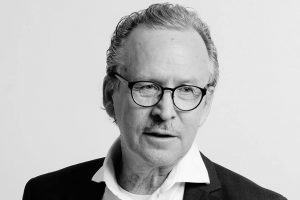
VMU visiting professor Alpo Rusi, who previously served as Finnish Ambassador and political adviser to Finnish President M.Ahtisaari, gave public lectures at the Faculty of Political Science and Diplomacy:
October 18 – EU relations with Russia: economical sanctions and positions towards EU after Crimea annexation; 12:00-13:30, Don.52 -613;
October 19 – Russia’s attitude and relations with Black sea regional countries; 12:00, Ged.44 – 202.
Prof. Alpo also visited VMU between 10-12 October and gave public lectures:
October 10 – Becoming diplomat or political adviser: skills to be acquired ; 13:00-14:30, Ged. 44-302
October 11 – The Lithuania’s and Finland’s position on security in the Baltic sea region. 14.30 – 16.00 Ged.44 – 301;
October 11 – Diplomatic reporting during the Digital age. 16.15-17.45, Ged. 44 – 301.
Ministry for Foreign Affairs of Finland has granted a one-off fund of 20 000 euros for the Rudolf Holsti named Professorship at Vytautas Magnus University in Kaunas, Lithuania, in the Faculty of Political Sciences and Diplomacy.
Vytautas Magnus University has appointed Dr. Alpo Rusi, Ambassador emeritus, Adjunct Professor at Helsinki University, to this named Professorship. Dr. Rusi has been a visiting professor at Vytautas Magnus university since March 2016.
As countries in the Baltic Sea region Finland and Lithuania have common interests both in security policy as well as in the European union. The named professorship will promote the common knowledge about issues related to the Baltic Sea co-operation in particular for the future challenges. It also will facilitate the deepening of co-operation between the universities of our two countries.
“Ambassador Alpo Rusi has a long and meritorious career in the Finnish foreign service as well as in the international assignments benefitting Finland. His appointment to the Rudolf Holsti named professorship to Kaunas is a valuable step for Finland and Lithuania”, Foreign Minister Timo Soini has stated.
The launching of the professorship will promote the knowledge concerning Rudolf Holsti (1881-1945) and his lifetime achievements as foreign minister of Finland during the early years of Finland’s independence 1919-22 and during the difficult times in the years 1936-38. He also served his country as a Special Envoy to Riga, Tallinn, Bern and the League of Nations between 1919 and 1940.
Brill Published Book Co-Edited by Prof. Egdūnas Račius

The Netherlands-based publishing house Brill has published Islamic Leadership in the European Lands of the Former Ottoman and Russian Empires, which is edited by Professor Egdūnas Račius from the VMU Dept. of Regional Studies and Antonina Zhelyazkova from the International Centre for Minority Studies and Intercultural Relations.
In the book, the history and contemporary development of Islamic leadership in over a dozen of Eastern European countries is analysed. The studies are presented through a double prism: the institutional structures of the Muslim communities and the place of the muftiates in the current national constellations on one hand, and the dimension of the spiritual guidance emanating from the muftiates on the other. The latter includes aspects such as the muftiates’ powers and role in supervision of mosques and other religious institutions, production, dissemination and control of religious knowledge and discussions on traditional and non-traditional forms of Islam engaged in by the muftiates.
This is the first comprehensive edited volume on the subject.
Contributors are: Srđan Barišić, Ayder Bulatov, Marko Hadjdinjak, Olsi Jazexhi, Memli Sh. Krasniqi, Armend Mehmeti, Dino Mujadžević, Agata S. Nalborczyk, Egdūnas Račius, Aziz Nazmi Shakir, Vitalii Shchepanskyi, Jakob Skovgaard-Petersen, Daša Slabčanka, Aid Smajić, Irina Vainovski-Mihai, Mykhaylo Yakubovych, and Galina Yemelianova.
Prof. M. Holmila Public Lectures on Alcohol’s Harm Issues
 We are pleased to invite to the lectures on alcohol’s harm to children and protection issues to be held by research professor Marja Holmila on 20th-22th of September, 2017 at Vytautas Magnus University (Putvinskio Street 23-312, Kaunas).
Professor Marja Holmila is one of the leading researcher in the field of alcohol’s harm to others, and currently work in The National Institute for Health and Welfare in Finland. She has an expertise on Community-based prevention of alcohol related harms; Family and alcohol Harms to children of alcohol abusing parents; Alcohol and violence; Women’s drinking.
20th – 21st September from 2pm till 5pm. V.Putvinskio St . No 23, room 312.
Themes:
Epidemiological knowledge on harms to children related to parental alcohol use
The discussion and action developed for child protection (emphasis on children’s’ individual rights, support to the whole family, the role of child welfare organisations, strengthening local health care and social services, national alcohol and drug policies.)
Child protection and child custody services – dilemmas and solutions
22st September from 11am till 1pm. V.Putvinskio St . No 23, room 311..
Theme:
Changing the culture and educating the parents, information campaigns, listening to the children
Please register or/ and for further information contact Birute Jogaite by email: birutejogaite@yahoo.com
Visiting Lecturer about Czech Republic Elections
 On September 26 th, 2017 (Tuesday) at the Faculty of Political Science and Diplomacy (Gedimino st. 44 – 203) a public lecture was given by Vladimír Naxera, Ph.D. of Department of Political Science and International Relations, Faculty of Philosophy and Arts, University of West Bohemia on the subject „Czech Republic on the Way of Parliamentary Elections“.
Vladimír Naxera, Ph.D. is a lecturer and researcher on the Department of Politics and International Relations at University of West Bohemia. His dissertation thesis was focused on the corruption and its perception in the post-Communist Czech Republic. His current field of interest lays in the instrumental politicization of history and field research of public political ceremonies and their role in the processes of re/enactment of specific form of discourses. He also deals with politics in Central Europe, contemporary Russian society, Russian Orthodox Church and (geo)politics.
Public lecture was organized by Department of Political Science, Faculty of Political Science and Diplomacy.